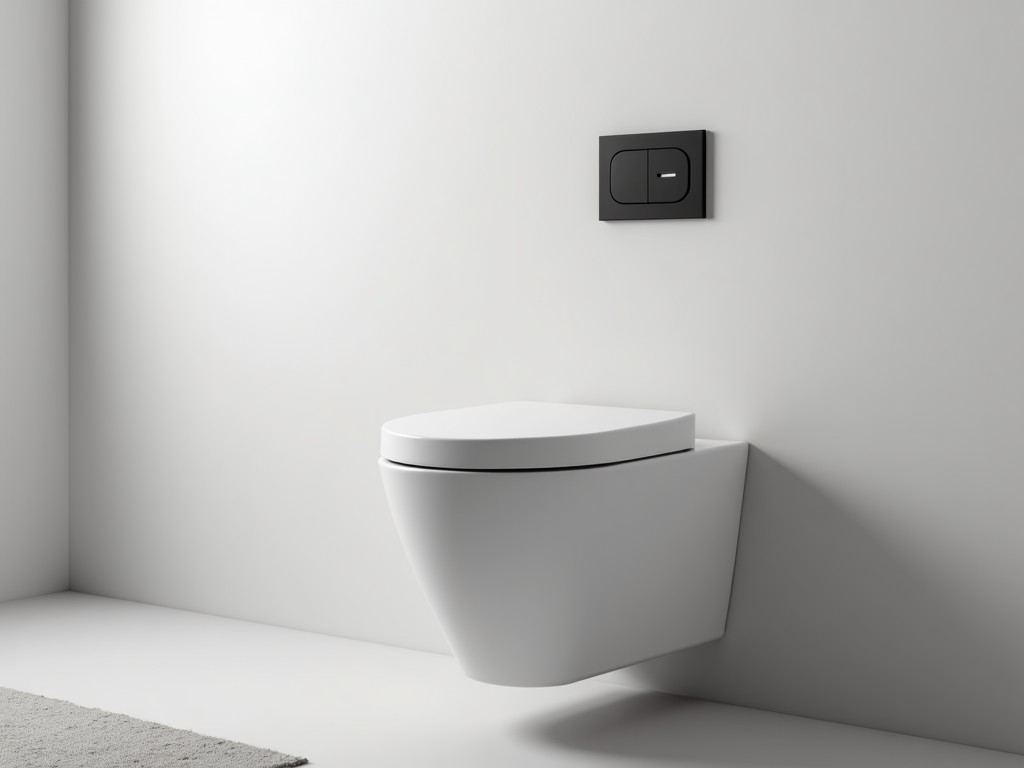
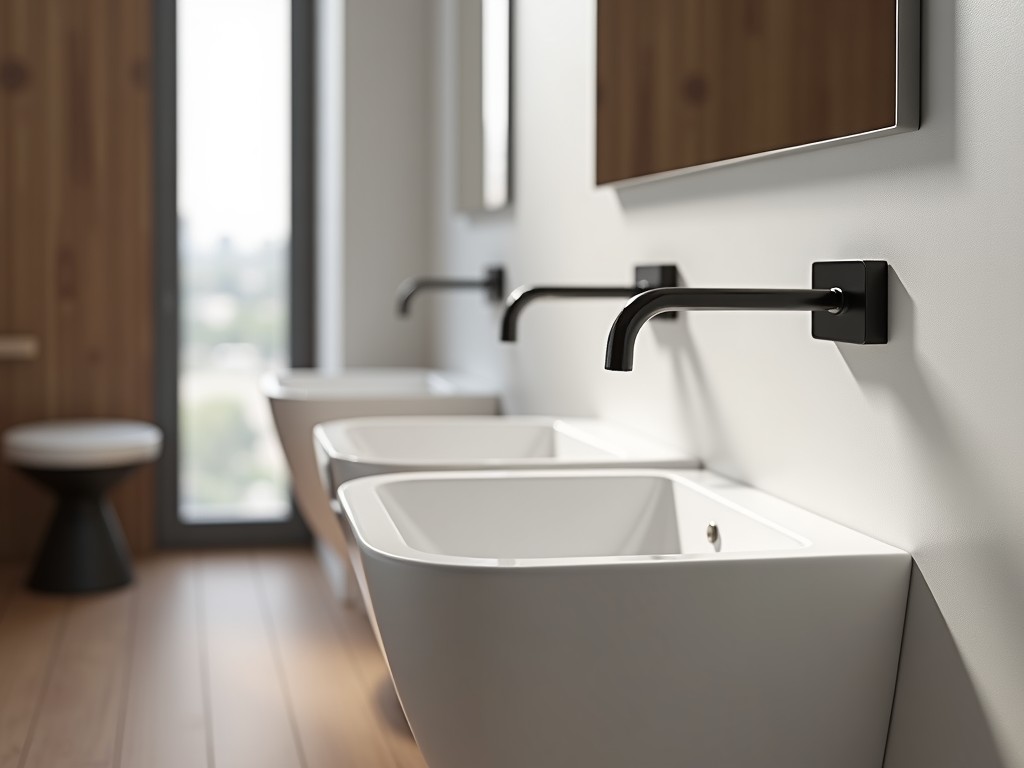
Wholesale Wall Hung Sanitary Ware
Wholesale Wall Hung Sanitary Ware
Wall hung sanitary ware comprises fixtures such as toilets, washbasins, and bidets that are affixed to a load‑bearing wall rather than resting on the floor. This configuration frees floor space, simplifies cleaning, and creates a modern aesthetic suitable for high‑traffic environments.
Typical applications include commercial restrooms in office complexes, hotels, healthcare facilities, and educational institutions where hygiene, durability, and space efficiency are primary concerns. The wall‑mounted design also facilitates barrier‑free access when installed at appropriate heights.
Design and Engineering Considerations
The primary engineering challenge is transferring the fixture’s operational loads to the wall substrate without compromising structural integrity. Load paths are typically managed through concealed mounting brackets that distribute forces across multiple studs or a reinforced backing plate.
Key design parameters include the fixture’s center of gravity, the maximum static load it must support (including user weight and dynamic forces), and the required water seal depth to prevent odour transmission. Engineers also evaluate the thermal expansion characteristics of the chosen material to avoid stress cracking in varying ambient conditions.
Material Options
| Material | Typical Density (g/cm³) | Chemical Resistance | Common Use Cases |
|---|---|---|---|
| Vitreous china | 2.4–2.6 | Excellent resistance to acids, alkalis, and cleaning agents | Standard toilets and basins |
| Stainless steel (grade 304) | 8.0 | High resistance to corrosion and staining | High‑durability basins and urinals |
| Solid surface (acrylic‑based) | 1.5–1.8 | Good resistance to household chemicals; seamless finish | Custom‑shaped basins and designer fixtures |
Installation and Structural Requirements
Proper installation begins with verifying that the wall can sustain the imposed loads. For concrete or masonry walls, anchor bolts or chemical anchors are embedded to a depth specified by the structural engineer. In stud‑wall constructions, a load‑spreading plate spanning at least two studs is recommended.
The mounting height is typically set between 400 mm and 480 mm from the finished floor to the fixture’s rim, adjusted for accessibility standards. Plumbing rough‑in must accommodate the concealed trap and supply lines, with a minimum clearance of 50 mm behind the fixture for service access.
Performance Characteristics
| Parameter | Typical Value | Notes |
|---|---|---|
| Maximum static load (toilet) | 400 kg | Distributed across mounting brackets |
| Flush volume (dual‑flush) | 3 L / 6 L | Adjustable via valve setting |
| Water seal depth | 50 mm | Meets standard odor barrier requirements |
| Impact resistance (ball drop) | No visible crack after 1.5 m drop of 0.5 kg steel ball | Tested per EN 997 |
Customization Options
Dimensional adjustments are common to suit specific architectural layouts. Length, width, and height can be altered within the limits of the material’s structural integrity, typically ±25 mm for vitreous china and ±10 mm for stainless steel.
Surface finishes include standard white glaze, colored glazes, matte or glossy textures, and antimicrobial coatings. Integrated accessories such as concealed cisterns, touch‑free flush valves, or hand‑rail supports can be specified during the design phase.
Branding elements like laser‑etched logos or custom‑molded profiles are feasible for large volume orders, subject to tooling lead times and minimum quantity thresholds.
Quality Control and Testing
Dimensional conformity is verified using coordinate‑measuring machines with a tolerance of ±0.5 mm for critical interfaces such as outlet angles and mounting hole patterns.
Glaze adhesion is assessed via cross‑hatch and boil‑test procedures, ensuring no flaking after 24 hours of immersion in boiling water. Impact resistance follows the steel‑ball drop test outlined in EN 997, with acceptance criteria of zero visible cracks.
Each production lot undergoes a hydrostatic pressure test at 1.5 times the working pressure to confirm leak‑free performance of the internal trap and supply connections.
Packaging and Logistics
Fixtures are packed in double‑wall corrugated cartons with interior corner protectors and polyethylene foam inserts to safeguard edges and glaze surfaces during transit.
Palletization follows ISO‑standard footprint dimensions, allowing efficient stacking and forklift handling. Each pallet is secured with stretch film and corner straps, and a humidity indicator is included to monitor moisture exposure.
For overseas shipments, cartons are marked with handling symbols and accompanied by a packing list that details SKU, quantity, weight, and destination country compliance information.
Frequently Asked Questions
- Can dimensions be customized? Yes, length, width, and mounting hole locations can be adjusted within material‑specific limits; custom tooling may be required for significant deviations.
- What information is needed for a quotation? Required details include desired fixture type, material preference, quantity, any dimensional modifications, finish specifications, and delivery destination.
- Which materials are available? Standard offerings are vitreous china, grade 304 stainless steel, and acrylic‑based solid surface; other alloys or composites are available upon request.
- How is quality inspected? Every batch undergoes dimensional checks, glaze adhesion testing, impact resistance, and hydrostatic pressure testing before release.
- What packaging methods are available? Standard packaging uses double‑wall cartons with foam protection; custom crating or pallet configurations can be arranged for large or fragile items.
- How are export shipments protected? Cartons include moisture barriers, corner protectors, and are stretch‑wrapped on pallets; optional insurance and fumigation certificates are provided as needed.
- What is the typical production lead time? Lead times range from 4–6 weeks for standard items and 8–12 weeks for customized orders, depending on tooling and material availability.
- How are samples arranged? Sample units can be shipped via express courier after receipt of a signed sample agreement and payment of applicable fees.
Get in Touch
For project‑specific technical data, pricing, or to request a sample, please contact our sales engineering team.