Two Piece Wall Hung Toilet
Two Piece Wall Hung Toilet
Overview
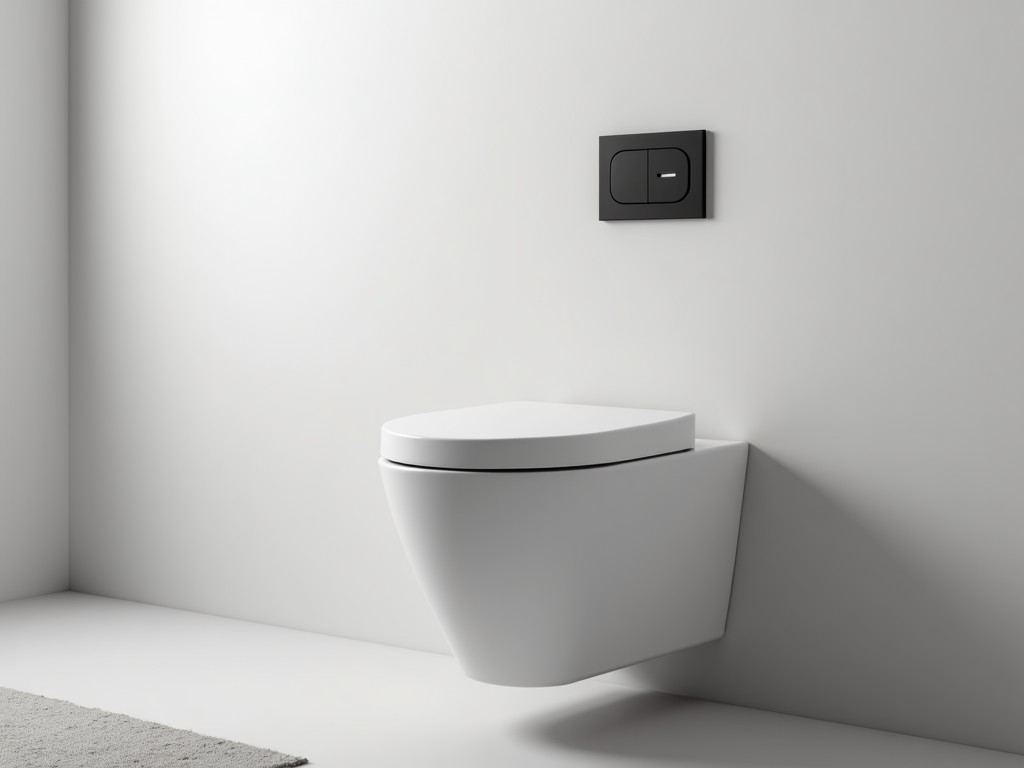
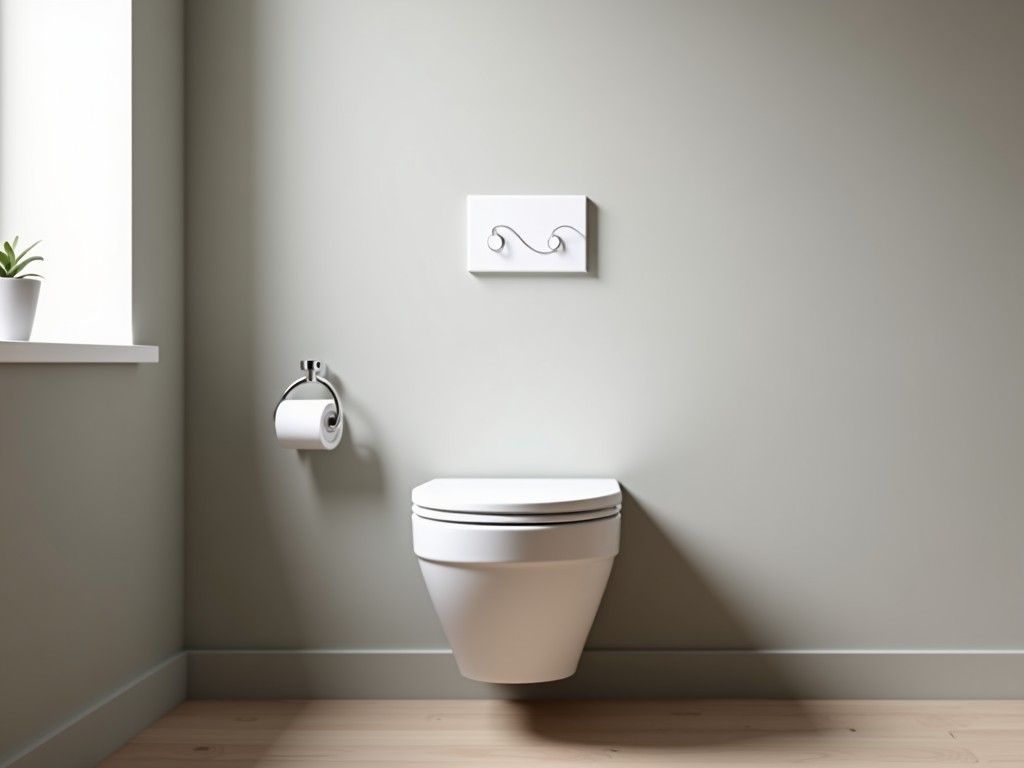
A two piece wall hung toilet consists of a separate vitreous china bowl and tank that are mounted to a concealed steel frame fixed to the wall. The tank is hidden behind a access panel, leaving only the bowl and flush actuator visible. This configuration eliminates the floor‑standing pedestal, freeing floor area and simplifying cleaning.
The wall‑mounted arrangement transfers the load to the building structure through the support frame, allowing the fixture to sustain static loads of up to 400 kg when installed according to the manufacturer’s anchoring specifications. This load capacity is verified by static testing per ASME A112.19.2.
Design Characteristics
The bowl features a symmetrical siphon jet with a trapway diameter of 70 mm, designed to achieve a single‑flush volume of 4.8 L while maintaining a minimum MaP score of 600 g. The glazed surface exhibits a water absorption rate below 0.5 % after 24 h immersion, reducing staining and facilitating sanitary maintenance.
The tank employs a dual‑flush valve with a low‑flow setting of 3 L and a full‑flow setting of 4.8 L, actuated by a pneumatic push button accessible through the front panel. The valve mechanism is constructed from POM acetal with a silicone seal rated for 150 000 cycles.
Mounting hardware includes galvanized steel brackets with M10 anchor bolts, pre‑drilled for 12 mm concrete embedment. The frame allows vertical adjustment of ±25 mm to accommodate variations in wall stud spacing and finish thickness.
Technical Specifications
| Parameter | Typical Value | Notes |
|---|---|---|
| Bowl Material | Vitreous china | Glazed finish, <0.5 % water absorption |
| Tank Material | High‑density polyethylene (HDPE) | Impact resistant, UV stabilized |
| Flush Volume (Low/Full) | 3 L / 4.8 L | Dual‑flush pneumatic valve |
| Maximum Static Load | 400 kg | Tested per ASME A112.19.2 |
| Rough‑in Distance | 180 mm (center of outlet to finished wall) | Adjustable via frame brackets |
| Overall Height (Bowl Rim) | 340 mm | Standard ergonomic height |
Applications
In commercial office buildings, the wall hung configuration reduces cleaning time in high‑traffic restrooms because the floor area beneath the bowl is unobstructed, allowing mopping and vacuuming without maneuvering around a pedestal.
Healthcare facilities benefit from the reduced crevices and smooth surfaces, which lower the risk of bacterial colonization and support infection control protocols that require frequent disinfection of fixtures.
Hospitality installations, such as boutique hotels, use the minimal visual profile to create a sleek aesthetic while maintaining reliable performance under variable occupancy loads.
- Office complexes and corporate campuses
- Hospitals, clinics, and assisted living centers
- Hotels, resorts, and conference centers
- Educational institutions and dormitories
- Retail malls and airports
Installation Requirements
The support frame must be anchored to a load‑bearing wall capable of resisting shear forces generated during flushing. Typical anchoring involves M10 chemical anchors into concrete or steel studs with a minimum embedment depth of 90 mm.
Water supply connections use a 1/2‑inch NPT male thread with a flexible braided hose, allowing for minor misalignment. The waste outlet connects to a standard 100 mm PVC trap via a rubber sealing gasket.
After mounting, the tank access panel should be aligned to provide at least 50 mm clearance for service tools. Final verification includes checking for level within ±2 mm and confirming no leakage at the supply and waste joints under 6 bar hydrostatic pressure.
Maintenance Practices
Routine inspection involves checking the flush valve seal for wear and verifying that the dual‑flush actuator returns to its neutral position after each use. Seal replacement is recommended every 2 years or after 75 000 cycles, whichever occurs first.
The bowl surface can be cleaned with non‑abrasive pH‑neutral detergents; acidic cleaners below pH 4 should be avoided to preserve the glaze. Scratches deeper than 0.1 mm may affect flow dynamics and should be evaluated.
Periodic tightening of the mounting bolts to the specified torque of 25 Nm ensures continued load transfer and prevents loosening due to vibration.
Quality Control
Each bowl undergoes a dimensional inspection using a coordinate measuring machine (CMM) with a tolerance of ±0.5 mm on critical interfaces such as the outlet flange and mounting holes. Glaze uniformity is assessed by reflectance spectrometry to ensure a gloss value above 70 GU.
Tank assemblies are pressure tested at 6 bar for 5 minutes with no allowable drop. Functional testing of the dual‑flush valve includes cycle testing to 150 000 actuations with flow rate verification at both low and high settings.
Final product marking includes a laser‑etched lot number and date code, enabling traceability to raw material batches and test records.
Customization Options
Bowl color can be selected from standard white, off‑white, or custom pigment matches upon request, with the glaze formulation adjusted to maintain the <0.5 % water absorption specification.
Flush actuator styles include pneumatic push button, touchless infrared sensor, or manual lever, each compatible with the same tank valve mechanism.
Frame dimensions can be altered to accommodate non‑standard stud spacing or to integrate with prefabricated wall panels, with adjustments limited to ±50 mm in width and height while maintaining the 400 kg load rating.
- Custom bowl colors (RAL or Pantone)
- Alternative flush actuators (button, sensor, lever)
- Modified support frame geometry
- Specialized waste outlet angles (45°, 90°)
Frequently Asked Questions
- Can the rough‑in distance be adjusted? Yes, the support frame provides ±25 mm vertical adjustment to accommodate variations in wall finish thickness.
- What information is required for a quotation? Project location, required quantity, desired flush actuator type, any custom color or frame modifications, and preferred delivery schedule.
- What materials are available for the bowl? Standard vitreous china; alternative ceramic composites are available upon special request.
- How is quality inspected? Dimensional CMM testing, glaze reflectance, hydrostatic pressure testing, and valve cycle testing as outlined above.
- What packaging methods are used for export? Each unit is packed in a double‑wall corrugated crate with foam corner protectors, sealed with strapping and marked with handling labels.
Contact for Inquiry
For technical data sheets, pricing, or to discuss project‑specific requirements, please reach out using the contact form below.
Request a Quote