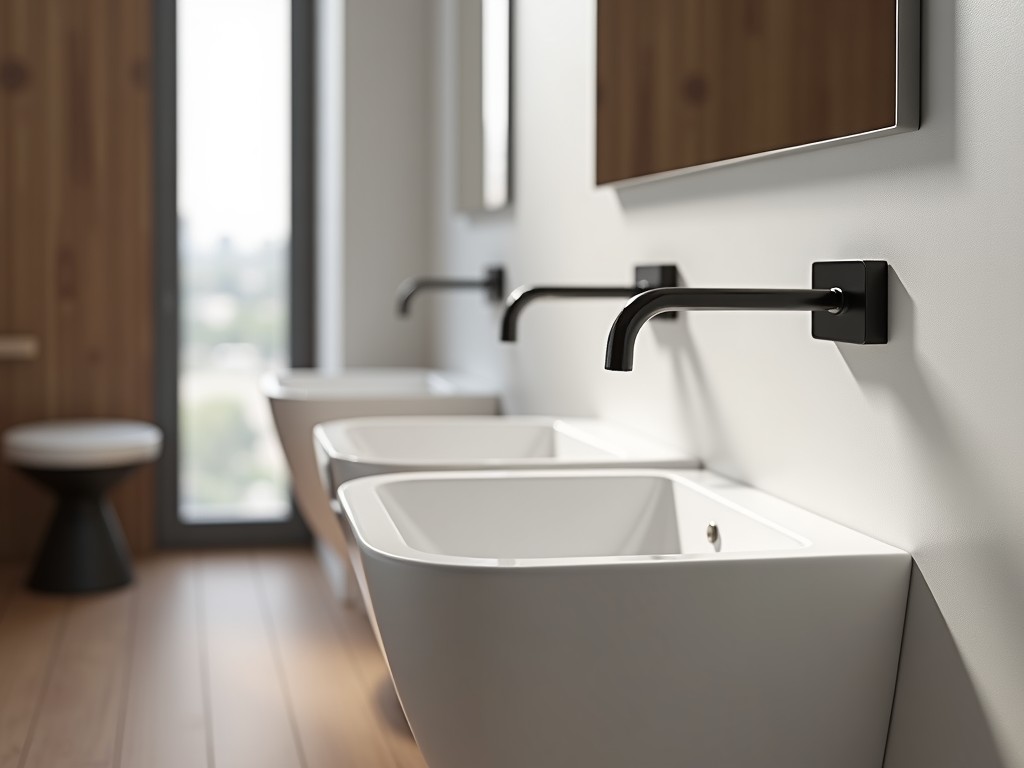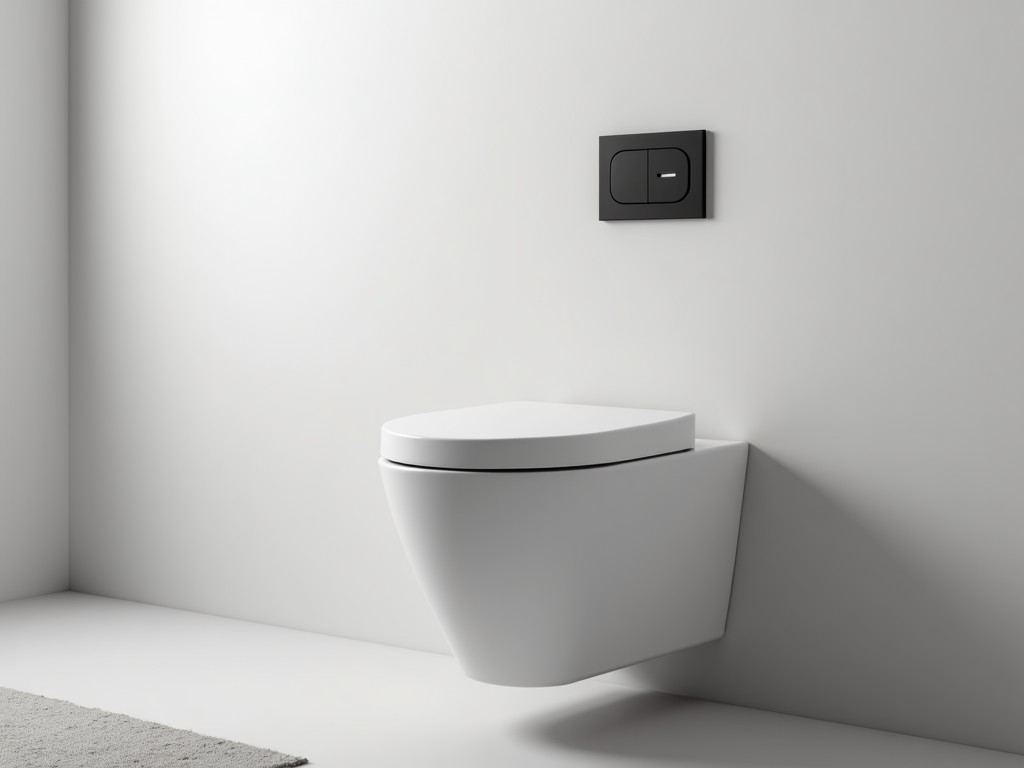
China Wall Hung Toilet Bowl
Wall Hung Toilet Bowl – Technical Overview
A wall hung toilet bowl is a vitreous china fixture designed to be mounted on a concealed steel or aluminum support frame that is anchored to the building structure. The bowl itself carries no floor load; all weight is transferred through the frame to the wall studs or concrete slab.
This configuration eliminates the pedestal base found on floor‑mounted units, resulting in a clear floor area that simplifies cleaning and reduces the risk of water pooling around the fixture. The exposed underside of the bowl also allows for straightforward access to plumbing connections during maintenance.
Key Technical Specifications
| Parameter | Typical Value | Notes |
|---|---|---|
| Overall Height (incl. frame) | 820 mm – 880 mm | Adjustable via frame brackets |
| Bowl Width | 360 mm – 380 mm | Standard commercial width |
| Bowl Depth (projection from wall) | 540 mm – 560 mm | Measured from finished wall to front rim |
| Rough‑in (distance from wall to center of outlet) | 180 mm – 205 mm | Depends on frame model |
| Flush Volume (single flush) | 4.5 L / 6.0 L (dual‑option) | Meets ISO 30500 water‑saving standards |
| Maximum Static Load | 400 kg | Tested according to EN 997 |
| Material | Vitreous china (feldspar, quartz, kaolin) | Fired at 1240 °C–1280 °C |
| Surface Finish | Glazed, Ra ≤ 0.8 µm | Facilitates easy cleaning and resists staining |
Material Composition and Vitrification Process
The bowl is formed from a slip containing approximately 50 % kaolin, 25 % silica, and 25 % feldspar, with minor additions of fluxes such as whiting. After shaping, the green body is dried to a moisture content below 0.5 % before being fired in a tunnel kiln.
Firing to temperatures between 1240 °C and 1280 °C induces vitrification, transforming the porous clay matrix into a non‑porous, glass‑like phase. This process yields a water absorption rate of less than 0.5 %, which is critical for preventing bacterial ingress and ensuring long‑term durability in wet environments.
The glaze applied prior to firing consists of a silica‑based frit mixed with coloring oxides (typically chromium‑green or cobalt‑blue for subtle hue variations). The glaze melts and forms a continuous coating that seals the body, providing the specified surface roughness and chemical resistance to cleaning agents.
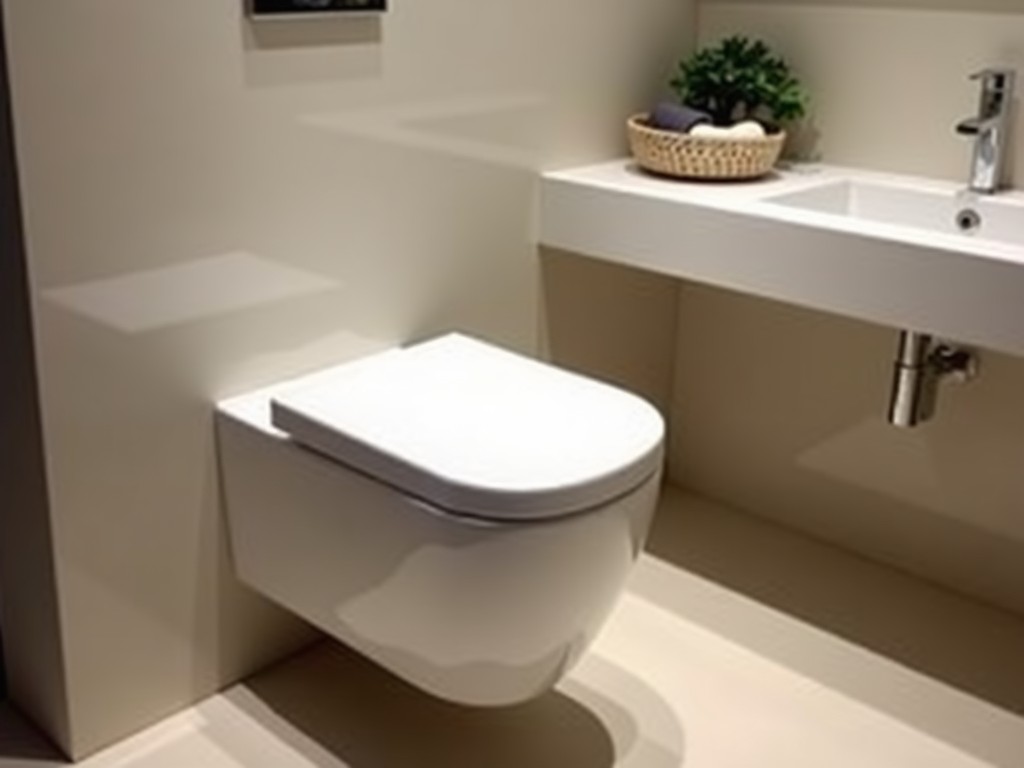
Design Features for Wall-Hung Installation
The bowl incorporates a rear‑mounted outlet that aligns with the frame’s waste connector. A reinforced ribbing pattern on the backside distributes load evenly across the mounting brackets, reducing stress concentrations during use.
Integrated locating lugs on the bowl’s underside engage with corresponding slots on the frame, allowing for precise vertical alignment without reliance on silicone sealants alone. This mechanical interlock simplifies on‑site adjustment and minimizes the risk of movement over time.
The front rim features a slightly tapered profile (approximately 2°) to guide water flow toward the trapway, enhancing siphonic action and reducing the likelihood of clogging in high‑traffic installations.
Applications in Commercial and Institutional Settings
Wall hung toilets are favored in facilities where floor space is at a premium and cleaning efficiency directly impacts operational costs. Examples include airport terminals, railway stations, hospitals, and office towers, where rapid turnover of restrooms demands minimal downtime for maintenance.
The concealed frame also allows for flexible placement relative to structural elements, enabling architects to locate fixtures away from load‑bearing walls or columns without compromising structural integrity. This flexibility supports open‑plan restroom layouts that improve user flow and accessibility compliance.
In environments with stringent hygiene requirements, such as food processing plants or laboratories, the smooth, non‑porous glaze and easy‑to‑clean underside reduce the risk of biofilm formation, supporting compliance with ISO 22000 and similar standards.
Quality Control and Manufacturing Considerations
Dimensional verification is performed at three stages: after green‑body forming, post‑drying, and post‑firing. Laser scanning equipment checks critical interfaces such as the outlet flange diameter and mounting hole spacing against tolerances of ±0.5 mm.
Glaze uniformity is assessed using a gloss meter; readings must fall within 70–85 GU at a 60° angle to ensure consistent appearance and chemical resistance. Additionally, a water absorption test (boiling method) confirms that each lot meets the ≤0.5 % threshold.
Load testing of the frame‑bowl assembly simulates static and dynamic forces encountered in use. A 400 kg static load is applied for 10 minutes, followed by 50 000 cycles of 150 kg impact to verify long‑term fatigue performance.
Customization Options
Bowl dimensions can be adjusted within the standard range to accommodate specific rough‑in constraints or accessibility requirements. For example, a projection of 520 mm may be requested for tighter corridors, while a height of 900 mm supports ergonomic preferences in assisted‑living facilities.
Glaze color options extend beyond the standard white to include muted shades such as ivory, light grey, or pastel blue, achieved by varying oxide concentrations in the frit. Custom colors are subject to minimum order quantities and additional firing cycles.
Frames can be supplied in either powder‑coated steel (corrosion‑resistance rating C3 per ISO 12944) or extruded aluminum with anodized finish, allowing selection based on environmental exposure or weight considerations.
Frequently Asked Questions
- Can the outlet orientation be changed? Yes, the frame can be rotated 90° to accommodate rear‑wall or side‑wall waste connections, provided the rough‑in distance remains within the specified range.
- What information is required for a quotation? Project‑specific rough‑in dimensions, desired flush volume, frame material preference, and any custom glaze color or dimensions.
- How is the product protected during export shipment? Each bowl is placed in a double‑wall corrugated crate with corner protectors and foam edge guards; frames are packed separately in steel‑banded pallets with moisture‑barrier wrapping.
- What is the typical production lead time? Standard configurations ship within 3–4 weeks after receipt of purchase order; customized items may require an additional 1–2 weeks for tooling and glaze development.
- Are samples available for evaluation? Yes, sample bowls and frame kits can be arranged upon request, with shipping costs borne by the requester.