Under Sink Bathroom Cabinet Top Factory
Under Sink Bathroom Cabinet Top – Factory Production Overview
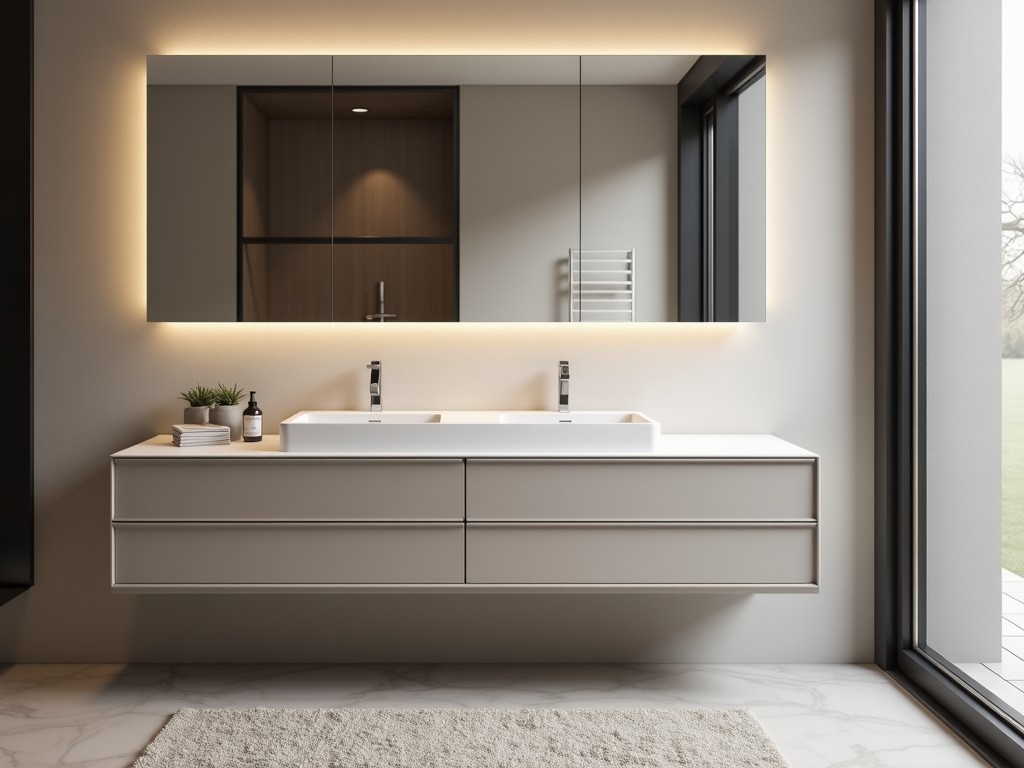
An under‑sink bathroom cabinet top serves as the horizontal work surface that integrates with the sink basin, faucet, and storage unit below. Its performance depends on material stability, dimensional accuracy, and surface finish under constant moisture exposure.
Material Selection and Performance Characteristics
Common substrate choices include solid surface (acrylic‑based), engineered quartz, high‑pressure laminate, and stainless steel. Solid surface typically offers a density of 1.6‑1.8 g/cm³, water absorption below 0.02%, and seamless repairability. Engineered quartz provides a flexural strength of 40‑50 MPa and a Mohs hardness of 6‑7, suitable for high‑traffic commercial restrooms. Laminate cores are usually particleboard or MDF with a thickness of 18‑25 mm, coated with a melamine face that resists staining to a rating of 4 (ISO 4586‑2). Stainless steel grades 304 or 316 deliver tensile strength >500 MPa and excellent corrosion resistance in chloride‑rich environments.
Dimensional Tolerances and Fit Requirements
Standard cabinet tops are produced to nominal widths of 600‑1200 mm and depths of 450‑600 mm, with thickness options ranging from 12 mm (laminate) to 30 mm (solid surface or quartz). Cutouts for undermount sinks are machined to a radius of 3‑5 mm to accommodate adhesive bonding, while faucet hole diameters are held to ±0.2 mm of the specified size (commonly 35 mm or 38 mm). Edge profiles such as eased, bullnose, or beveled are held to a tolerance of ±0.3 mm on the radius. Overall flatness is maintained within 0.5 mm per meter to ensure proper alignment with the cabinet carcass.
Surface Finish Options and Functional Coatings
Finishes are selected based on aesthetic preference and cleaning regimen. Polished solid surface yields a gloss level of 70‑80 GU (gloss units) and can be renewed with fine abrasive pads. Matte finishes fall below 20 GU, reducing visible fingerprints but requiring slightly more aggressive cleaning agents. Textured surfaces, such as sandblasted quartz, provide a slip‑resistance rating of R10 per DIN 51130. Antimicrobial coatings, typically silver‑ion based, achieve a 99.9% reduction of Escherichia coli and Staphylococcus aureus after 24 h exposure (ISO 22196). All finishes are UV‑stable, with color shift ΔE<2 after 500 h of Xenon arc testing.
Manufacturing Process Flow
Production begins with CNC routing of the raw slab to the programmed outline, achieving positional accuracy of ±0.1 mm. Edge bonding uses a two‑part polyurethane adhesive cured under 0.8 MPa pressure for 30 minutes, resulting in a bond strength >2 MPa. For quartz tops, a vacuum‑press consolidates resin and aggregates at 80 °C, eliminating voids below 0.5 % volume. Laminate faces are applied via hot‑press at 150 °C and 1.2 MPa, activating the melamine resin to form a cross‑linked surface. Final steps include CNC drilling of faucet and drain holes, followed by edge profiling with a diamond‑tipped router bit.
Quality Control Philosophy and Test Methods
Dimensional verification is performed on a coordinate‑measuring machine (CMM) with a repeatability of 0.01 mm, checking length, width, thickness, and cutout positions. Surface defect detection uses 45° lighting and a 10× magnification camera to identify scratches, pits, or inclusions larger than 0.1 mm. Chemical resistance is evaluated by immersing samples in common bathroom cleaners (pH 2‑12) for 24 h and measuring weight change (<0.05 %). Load testing applies a 150 N point load at the center of a 600 mm span; deflection must remain below 0.3 mm to meet serviceability criteria. All inspection results are recorded against a statistical process control chart with Cp≥1.33.
Customization Capabilities
- Length and width adjustable in 10 mm increments
- Thickness options: 12 mm, 18 mm, 25 mm, 30 mm
- Cutout shapes: rectangular, oval, custom CAD‑derived profiles
- Edge profiles: eased, bullnose, beveled, ogee, waterfall
- Finish: polished, matte, satin, textured, antimicrobial
- Integrated backsplash or side splash up to 100 mm high
- Pre‑drilled mounting holes for brackets or corrosion‑resistant inserts
Typical Applications in Commercial Environments
In healthcare facilities, non‑porous solid surface tops minimize bacterial harborage and tolerate frequent disinfection with quaternary ammonium compounds. Hospitality projects often select quartz for its resistance to staining from cosmetics and its ability to maintain a consistent appearance under varied lighting. Educational institutions benefit from laminate tops due to lower material cost and ease of replacement after impact damage. Industrial settings such as laboratories may require stainless steel tops for resistance to solvents and high temperatures. Each application leverages the specific mechanical and chemical properties of the chosen material to reduce maintenance cycles and extend service life.
Specification Table
| Parameter | Typical Value (Solid Surface) | Typical Value (Engineered Quartz) | Typical Value (Laminate) | Typical Value (Stainless Steel 304) |
|---|---|---|---|---|
| Density (g/cm³) | 1.6‑1.8 | 2.3‑2.5 | 0.6‑0.8 (core) | 8.0 |
| Water Absorption (%) | <0.02 | <0.05 | 0.2‑0.5 (face) | 0 |
| Flexural Strength (MPa) | 40‑60 | 40‑50 | 15‑25 | >500 |
| Mohs Hardness | 2‑3 | 6‑7 | 1‑2 (face) | 5‑6 |
| Max Service Temperature (°C) | 120 | 150 | 80 | >400 |
Packaging, Handling, and Logistics
Finished tops are protected by a double‑layer system: an initial wrap of low‑density polyethylene foam (5 mm thickness) followed by a corrugated cardboard sleeve with edge protectors. Palletized loads use ISO‑standard pallets (1200 × 1000 mm) with a maximum stack height of 1.2 m, secured by PET strapping. Humidity indicator cards are placed inside each package to monitor moisture levels during transit; acceptable range is 30‑60 % RH. Shock sensors record impacts exceeding 2 g, allowing carriers to verify handling quality. All packages are labeled with part number, material code, and QR code linking to the installation guide.
Frequently Asked Questions
Can dimensions be customized to match existing cabinetry? Yes. Length, width, and cutout positions are adjusted according to supplied CAD files or field measurements, with tolerances held to ±0.2 mm.
What information is required before quotation? Required data include overall dimensions, material preference, thickness, edge profile, finish type, cutout specifications (sink model, faucet hole size), and any integrated features such as backsplashes.
Which material options are available for high‑humidity environments? Solid surface, quartz, and stainless steel 316 are recommended; laminate is suitable only when the core is sealed with a moisture‑resistant barrier.
How is quality inspected before shipment? Each piece undergoes dimensional CMM verification, surface defect microscopy, chemical resistance immersion, and load deflection testing as described in the QC section.
What packaging methods protect the tops during overseas transport? Foam wrap, cardboard sleeves, corner protectors, and pallet strapping are standard; additional crating is available upon request for extra‑large or fragile profiles.
What is the typical production lead time? Lead time ranges from 10‑18 working days depending on material availability and complexity of custom features; expedited schedules can be arranged for critical projects.
For detailed technical data sheets, sample requests, or to discuss a specific project, please use the contact form below.
Request Quote & Technical Consultation