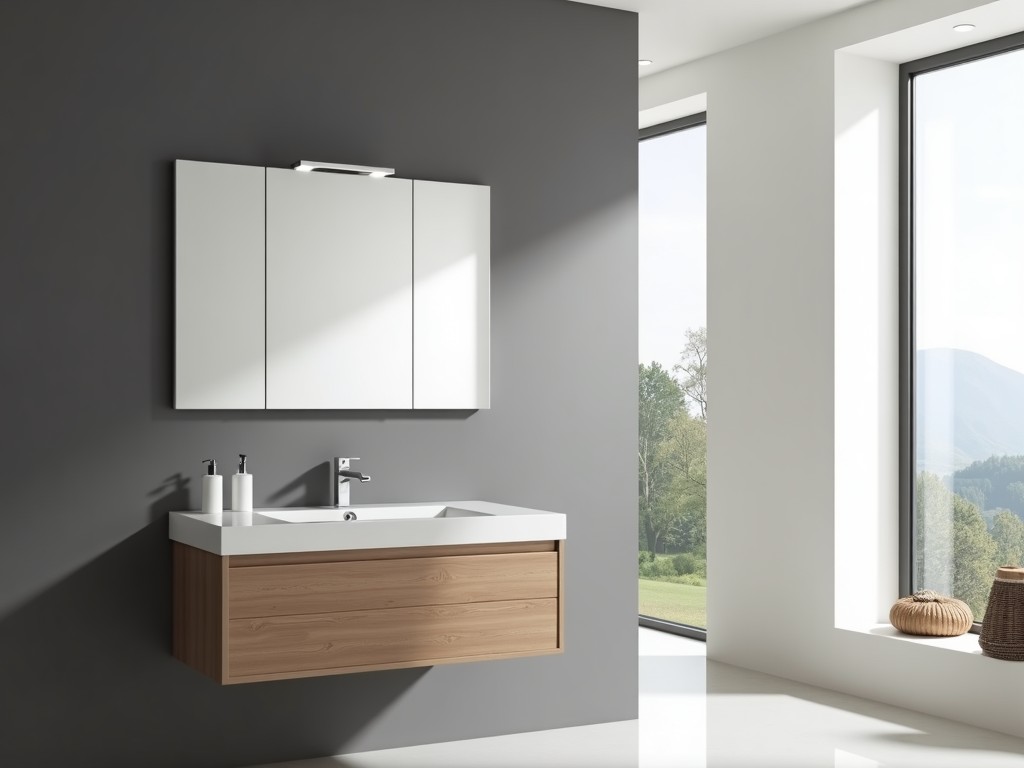
Sliding Mirror Wall Mounted Bathroom Cabinet
Sliding Mirror Wall Mounted Bathroom Cabinet
This cabinet combines a full‑length mirror with a sliding door system to save floor space in wet environments. The mirror panel serves both as a reflective surface and as the cabinet door, eliminating the need for a separate hinge‑mounted door. The design is intended for installations where wall depth is limited and frequent access to stored items is required.
Technical Specifications
| Parameter | Typical Value | Notes / Conditions |
|---|---|---|
| Overall Width | 600 mm – 1200 mm | Customizable in 50 mm increments |
| Overall Height | 700 mm – 2000 mm | Standard heights; taller units require intermediate support |
| Depth (door closed) | 120 mm | Includes mirror thickness and frame |
| Mirror Glass Thickness | 5 mm tempered | Meets EN 12150‑1 for safety glass |
| Frame Material | Extruded aluminum alloy 6063‑T5 | Powder‑coated or anodized finish |
| Sliding Mechanism | Ball‑bearing rollers with nylon guides | Soft‑close option available |
| Load Capacity per Door | 15 kg | Evenly distributed load |
| Corrosion Resistance | ASTM B117 salt spray 500 h (rating 9) | Suitable for high‑humidity bathrooms |
| Surface Finish | Powder coating (RAL 9010 white) or clear anodize | Custom colors on request |
| Optional LED Lighting | 12 V DC, IP44, 3000 K–6000 K adjustable | Driver supplied separately |
Materials & Construction
The cabinet frame is produced from extruded aluminum alloy 6063‑T5, selected for its high strength‑to‑weight ratio and inherent resistance to corrosion in chloride‑rich atmospheres. After extrusion, the profiles undergo a pretreatment process (alkaline cleaning, rinsing, conversion coating) before receiving either a polyester powder coat or a clear anodic oxide layer, both of which provide a barrier against moisture ingress. The mirror panel is made from tempered float glass with a silver backing and a protective polyurethane coating to reduce edge chipping and to meet safety standards for bathroom accessories.
Sliding hardware consists of precision‑ground steel rollers housed in nylon‑lined carriers, which ride on hardened stainless‑steel tracks attached to the inner frame. This combination yields low friction, smooth motion, and minimal wear over thousands of cycles. All fasteners are austenitic stainless steel (A2‑70) to prevent galvanic corrosion when in contact with the aluminum frame.
Design Features
- Soft‑close dampers reduce impact noise and protect the mirror edge.
- Concealed pull‑handles maintain a clean aesthetic while providing ergonomic grip.
- Adjustable interior shelving (glass or polymer) allows reconfiguration for different toiletries.
- Optional anti‑fog coating on the mirror surface minimizes condensation buildup during showers.
- Integrated LED strip runs along the top edge, providing indirect illumination without glare.
Typical Applications
In residential bathrooms, the sliding mirror cabinet addresses the common limitation of limited floor area by combining storage and mirror functions in a single wall‑mounted unit. Hotels and resort spas benefit from the reduced cleaning effort, as the seamless surfaces have fewer crevices where moisture and soap residue can accumulate. Healthcare facilities, such as patient rooms and assisted‑living suites, adopt this design because the smooth, easy‑to‑clean surfaces support infection‑control protocols while providing patients with a personal grooming aid.
Installation Considerations
The cabinet is secured to the wall using two or more M8 anchor bolts inserted into studs or suitable masonry plugs, depending on the substrate. A minimum clearance of 20 mm above the unit is recommended to allow unhindered door travel and to facilitate ventilation. Electrical provisions for optional LED lighting should be routed through a conduit that meets local bathroom wiring regulations (IP44 rated). Leveling shims are supplied to compensate for wall irregularities and ensure the sliding track remains parallel to the floor plane.
Quality Assurance
Each unit undergoes a dimensional inspection using calibrated CMM probes to verify that width, height, and depth tolerances remain within ±0.5 mm. The mirror’s surface flatness is checked with an interferometer, ensuring a deviation of less than 2 µm across the clear aperture. Sliding mechanisms are cycle‑tested for 20 000 full open‑close operations at a speed of 0.2 m/s, after which the pull‑force is measured to confirm it stays below 8 N. Final visual inspection includes a 10× magnification check for coating defects, scratches, or edge chips before packaging.
Customization Options
- Tailored width, height, and depth to match specific wall niches.
- Choice of frame finishes: matte white, brushed aluminum, custom RAL colors, or wood‑grain laminate.
- Mirror treatments: clear, low‑iron, bronze tint, or anti‑fog coating.
- Interior accessories: glass shelves, polymer bins, magnetic strips, or internal power outlet.
- Hardware upgrades: soft‑close dampers, push‑to‑open mechanisms, or integrated touch‑sensor lighting controls.
Frequently Asked Questions
Can dimensions be customized? Yes, width, height, and depth can be adjusted in 50 mm increments to suit project requirements.
What information is needed for a quotation? Provide the desired overall dimensions, frame finish, mirror type, any optional features (LED, anti‑fog, shelving), and the wall substrate type.
Which materials are available for the frame? Standard extruded aluminum alloy 6063‑T5 with powder coat or anodize; alternative stainless‑steel frames are available upon request for highly corrosive environments.
How is quality inspected? Each cabinet passes dimensional, surface‑flatness, cycle‑test, and visual inspections before release.