China Bathroom Sink And Cabinet Combo
China Bathroom Sink and Cabinet Combo
Product Overview
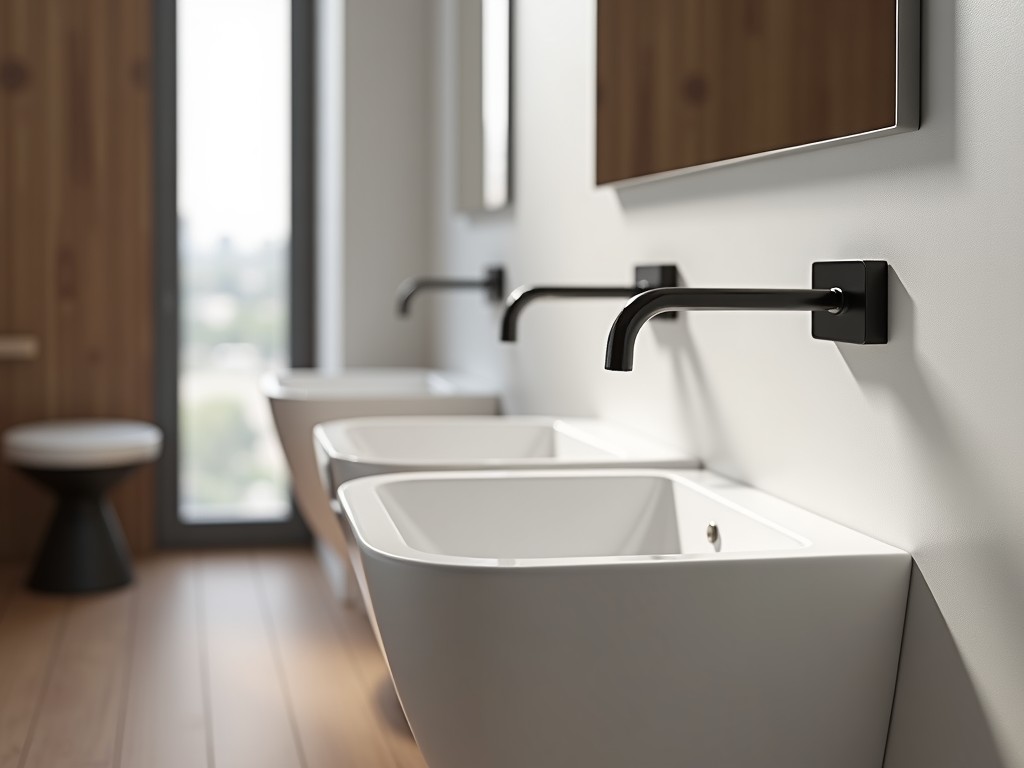
The integrated sink and cabinet unit combines a vitreous china basin with a storage base designed for commercial restrooms where space efficiency and plumbing alignment are critical. By mounting the sink directly onto the cabinet, the assembly eliminates gaps that can harbor moisture and reduces installation time compared to separate components.
Material Composition
The sink bowl is manufactured from high‑fired vitreous china, offering a non‑porous surface with water absorption below 0.5% per ASTM C373. Cabinet bodies are available in three primary constructions: 304 stainless steel sheet (0.8 mm thickness), marine‑grade plywood core faced with high‑pressure laminate (18 mm total thickness), or solid polypropylene panels (12 mm thickness) for chemically aggressive environments.
Each material option provides distinct advantages regarding impact resistance, corrosion tolerance, and weight, allowing specifiers to match the unit to the expected usage intensity and cleaning regimen.
| Material | Typical Thickness | Corrosion Resistance | Approx. Weight (kg) |
|---|---|---|---|
| Vitreous China Sink | 8‑10 mm (wall) | Excellent (non‑porous) | 12‑15 |
| 304 Stainless Steel Cabinet | 0.8 mm sheet | Very good (rust‑free) | 18‑22 |
| Marine Plywood + Laminate | 18 mm core | Good (sealed edges) | 14‑18 |
| Solid Polypropylene | 12 mm panel | Excellent (chemical) | 10‑13 |
Design and Dimensional Flexibility
Standard configurations feature a sink width of 550 mm, front‑to‑back depth of 480 mm, and basin height of 190 mm above the cabinet top. The cabinet itself measures 600 mm wide, 500 mm deep, and 800 mm high, providing a comfortable working height for most users. Adjustable leveling feet (±15 mm) accommodate uneven flooring without compromising structural integrity.
Faucet mounting is facilitated by pre‑drilled 35 mm diameter holes on 100 mm centers, compatible with widespread single‑hole or widespread fixtures. Optional side panels can be added to increase storage depth by 100 mm while maintaining the same footprint.
- Sink bowl: 550 mm × 480 mm × 190 mm (W×D×H)
- Cabinet: 600 mm × 500 mm × 800 mm (W×D×H)
- Adjustable feet: ±15 mm vertical range
- Pre‑drilled faucet holes: Ø35 mm, 100 mm spacing
Performance Standards and Testing
Units are manufactured to comply with ASME A112.19.2 for ceramic plumbing fixtures and CSA B45.5 for plastic components where applicable. Load testing simulates a static weight of 150 kg applied to the sink rim for 24 hours, confirming no permanent deformation or glaze cracking.
Water absorption is measured per ASTM C373, with typical values under 0.3% for the vitreous china bowl, ensuring resistance to staining and microbial growth. Surface hardness, evaluated via Mohs scale, averages 6‑7, providing durability against abrasive cleaning agents.
Typical Applications
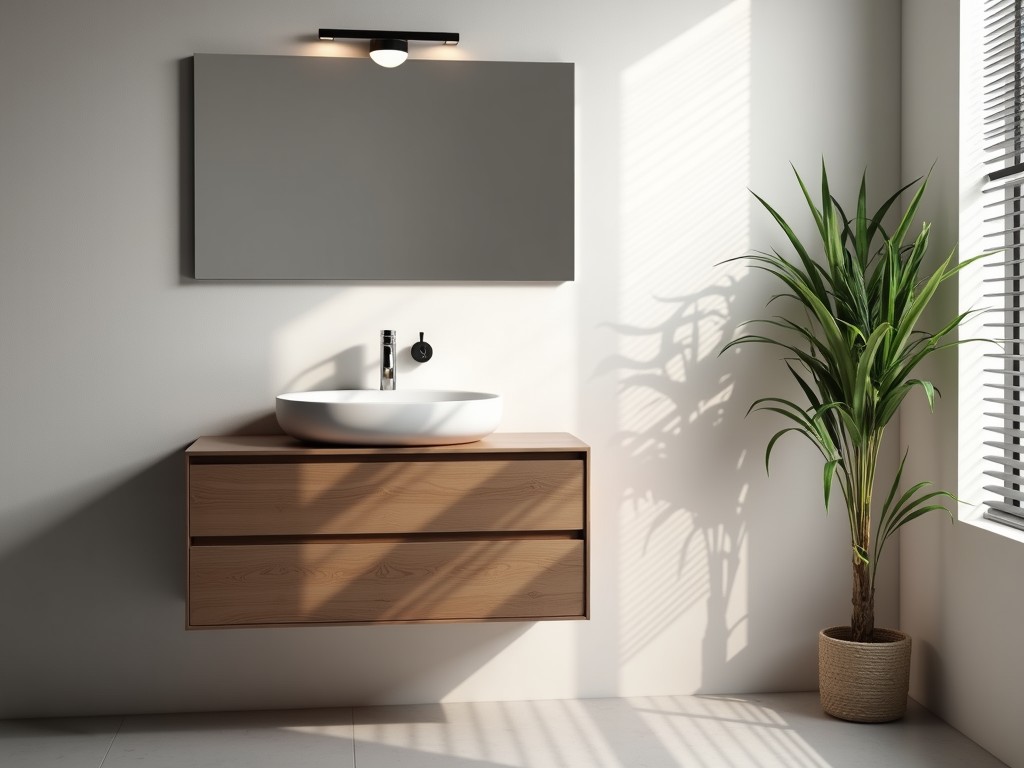
In high‑traffic facilities such as airports, shopping centers, and educational institutions, the combined sink‑cabinet reduces the number of separate fixtures that require individual sealing and maintenance. The integrated design minimizes joint failure points, a common source of water ingress in retrofit projects.
Healthcare environments benefit from the seamless surface, which simplifies disinfection protocols and eliminates crevices where pathogens can harbor. The optional antimicrobial laminate further supports infection‑control requirements.
- Airport terminals – constant use, rapid cleaning cycles
- University dormitories – vandal‑resistant surfaces
- Hospital patient wards – low‑absorption, easy‑sanitize
- Retail mall restrooms – aesthetic consistency with modular design
Customization Options
Beyond standard dimensions, customers may specify alternative sink shapes (rectangular, oval, or corner) and cabinet finishes including brushed stainless, powder‑coated colors, or wood‑grain laminate. Faucet hole patterns can be relocated to accommodate widespread or wall‑mounted fixtures, and integrated accessories such as soap dispensers, paper‑towel holders, or touch‑less sensor valves are available as factory‑installed options.
For projects requiring ADA compliance, the cabinet height can be lowered to 760 mm with knee clearance of at least 680 mm width and 200 mm depth, while maintaining the same sink ergonomics.
Quality Control Philosophy
Each batch undergoes dimensional inspection using coordinate‑measuring machines, with tolerances held to ±2 mm for critical interfaces such as sink‑cabinet mating surfaces. Glaze uniformity is verified by spectrophotometric analysis, ensuring color ΔE < 2.0 across the visible spectrum.
Before packaging, units are subjected to a hydrostatic pressure test at 0.6 MPa for five minutes to confirm leak‑free seals. Final visual inspection checks for surface defects, edge chipping, and proper alignment of hardware.
Packaging and Shipping
Finished units are packed on heat‑treated pallets with corner protectors and edge‑board reinforcement. A moisture‑barrier wrap surrounds the assembly, followed by a corrugated outer sleeve rated for 30 ECT. Pallets are stretch‑wrapped and secured with polyester strapping to prevent movement during transit.
Standard shipment configurations accommodate 20‑unit pallets for LCL shipments and 40‑unit pallets for FCL containers, reducing handling steps and minimizing the risk of damage.
Frequently Asked Questions
| Question | Answer |
|---|---|
| Can dimensions be customized? | Yes. Width, depth, and height can be adjusted within structural limits; consult engineering for exact constraints. |
| What information is required for a quotation? | Required data include desired material, sink shape, faucet hole configuration, quantity, and delivery destination. |
| Which material options are available? | Vitreous china sink with cabinet choices of 304 stainless steel, marine plywood + laminate, or solid polypropylene. |
| How is quality inspected? | Dimensional CMM checks, glaze spectrophotometry, hydrostatic leak test, and final visual inspection. |
| What packaging methods are used? | Heat‑treated pallets, corner protection, moisture barrier wrap, corrugated sleeve, stretch wrap, and polyester strapping. |
| What is the typical production lead time? | Four to six weeks after receipt of approved drawings and deposit, depending on material selection and order size. |
Contact for Technical Inquiry
To discuss project‑specific requirements, request a CAD model, or obtain a detailed quotation, please use the inquiry form linked below. Our engineering team will respond with material recommendations, lead‑time estimates, and any necessary compliance documentation.