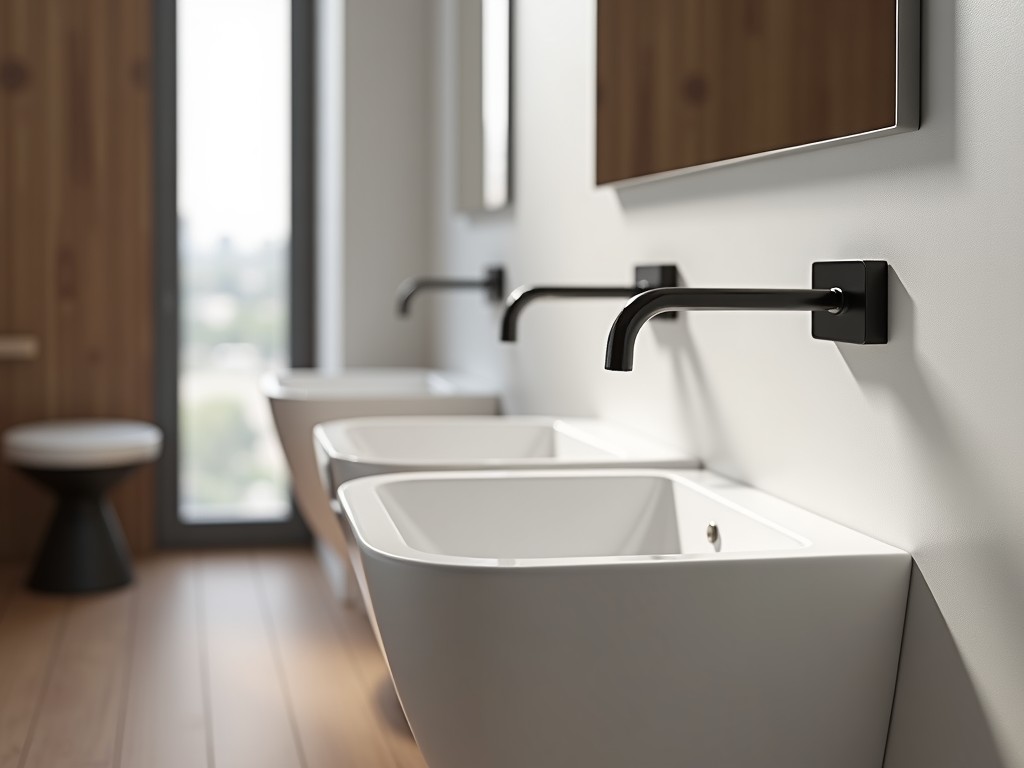
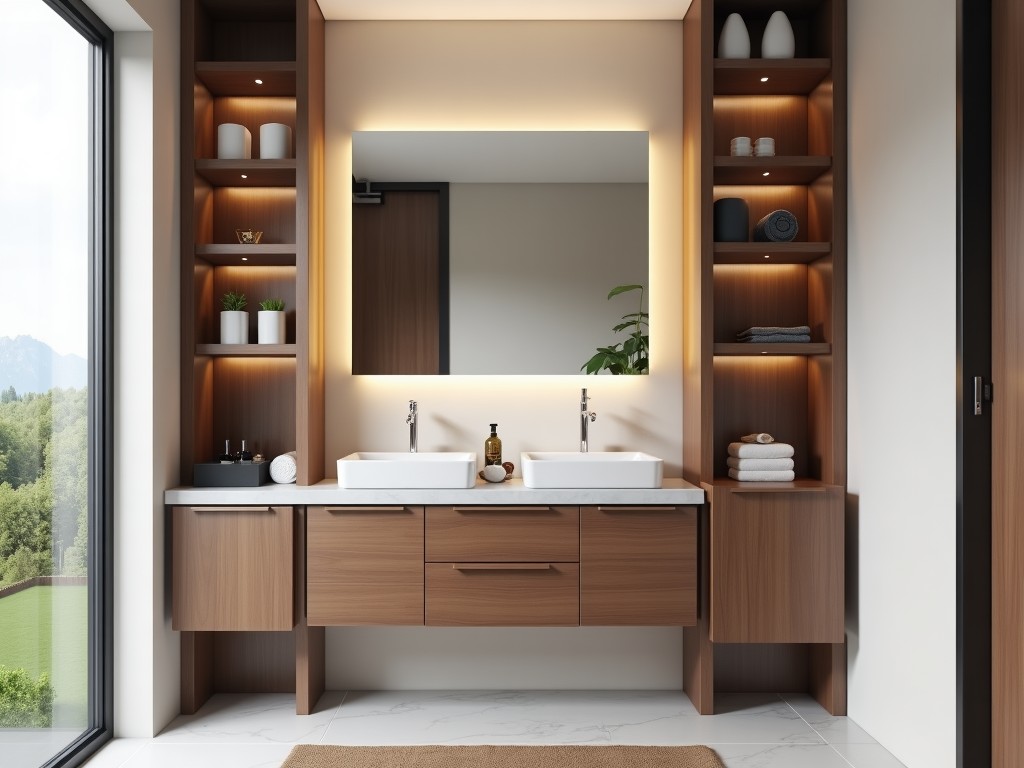
China 24 Inch Bathroom Cabinet
24 Inch Bathroom Cabinet – Technical Overview
A 24‑inch wide bathroom cabinet is a common module in commercial restroom designs where space planning requires predictable clearance for fixtures and ADA compliance.
The nominal width allows designers to align multiple units side‑by‑side while maintaining a 600 mm (approx. 24 in) grid that simplifies rough‑in plumbing and electrical rough‑outs.
Materials and Construction
Material selection begins with the core panel, which influences both weight and resistance to moisture ingress.
Typical cores are either particleboard with a melamine impregnated surface or medium‑density fiberboard (MDF) treated with a water‑resistant resin.
Panel Core
Particleboard cores are manufactured from wood chips bonded with urea‑formaldehyde resin, delivering a density range of 600‑700 kg/m³ and a thickness tolerance of ±0.5 mm for 18 mm panel stock.
MDF cores consist of refined wood fibers combined with a phenol‑formaldehyde binder, achieving a more uniform density of 700‑800 kg/m³ and improved screw holding strength.
Surface Finish
The outer face receives a decorative laminate or PVC foil that is sealed at the edges with a hot‑melt adhesive to prevent water penetration.
Laminate thicknesses typically range from 0.15 mm to 0.30 mm, providing abrasion resistance measured by Taber wear cycles of 3000‑5000 before visible wear.
Dimensional Specifications
All critical dimensions are held to tolerances that allow seamless integration with standard bathroom fixtures.
| Parameter | Typical Value |
|---|---|
| Nominal Width | 610 mm (24 in) |
| Nominal Height | 760 mm (30 in) – 860 mm (34 in) optional |
| Nominal Depth | 460 mm (18 in) |
| Panel Thickness | 18 mm ±0.5 mm |
| Door Overlap | 12 mm |
| Edge Seal Width | 4 mm hot‑melt adhesive |
| Approximate Weight | 12 kg (panel only) |
Hardware and Accessories
Hinges are selected based on load capacity and corrosion resistance, with common choices being concealed soft‑close hinges rated for 30 kg door weight.
Handles or pulls are typically stainless steel grade 304, offering a tensile strength of 520 MPa and resistance to pitting in chlorinated environments.
Installation Considerations
Mounting methods include wall‑mounted brackets secured to studs or concealed steel cleats that transfer load directly to the building structure.
Clearance for door swing requires a minimum of 50 mm (2 in) beyond the cabinet edge to avoid interference with adjacent fixtures.
Plumbing rough‑in should accommodate a 150 mm (6 in) offset from the back panel to allow for trap and supply lines.
Quality Assurance
Each batch undergoes dimensional verification using a calibrated CMM, with acceptance criteria of ±0.5 mm on length and width dimensions.
Surface adhesion is tested via cross‑hatch tape test per ASTM D3359, requiring a rating of 4B or higher.
Moisture resistance is evaluated by submersion in water at 23 °C for 24 h, followed by visual inspection for delamination or swelling; acceptable change in thickness is less than 2 %.
Applications in Commercial Projects
In hotel guest bathrooms, the 24‑inch module aligns with standard vanity widths, enabling consistent layout across multiple floors while reducing custom fabrication.
For high‑traffic public restrooms, the cabinet’s laminate surface resists staining from cleaning agents, and the sealed edges prevent water ingress that could cause substrate swelling.
Healthcare facilities benefit from the smooth, non‑porous finish that supports infection control protocols, allowing easy wipe‑down with disinfectants.
Frequently Asked Questions
Can dimensions be customized?
Width, height and depth can be adjusted in 10 mm increments to suit project‑specific layouts, subject to panel availability.
What information is required before quotation?
A sketch or layout showing required cabinet count, desired finish, hardware preferences and any cut‑outs for plumbing or electrical.
What materials are available?
Standard options include melamine‑faced particleboard, water‑resistant MDF, and optional marine‑grade plywood for wet zones.
How is quality inspected?
Each unit undergoes dimensional checks, adhesion testing, and moisture resistance evaluation before packaging.
To discuss project‑specific dimensions, material options, or lead times, please contact our technical team.
Request a quote