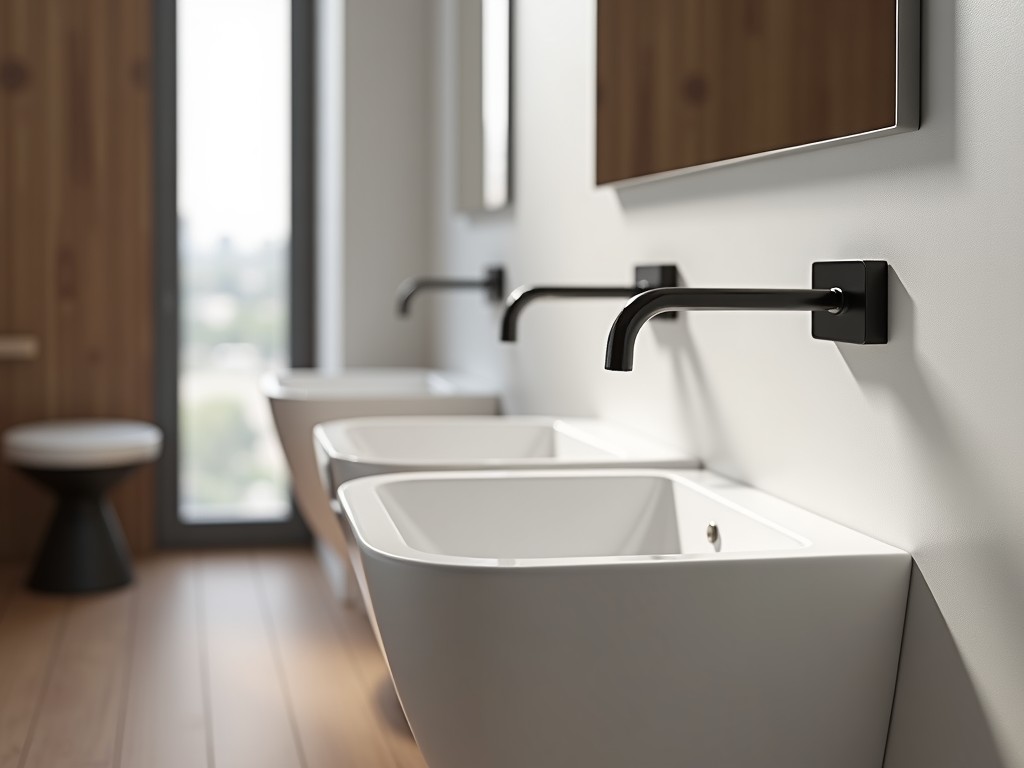
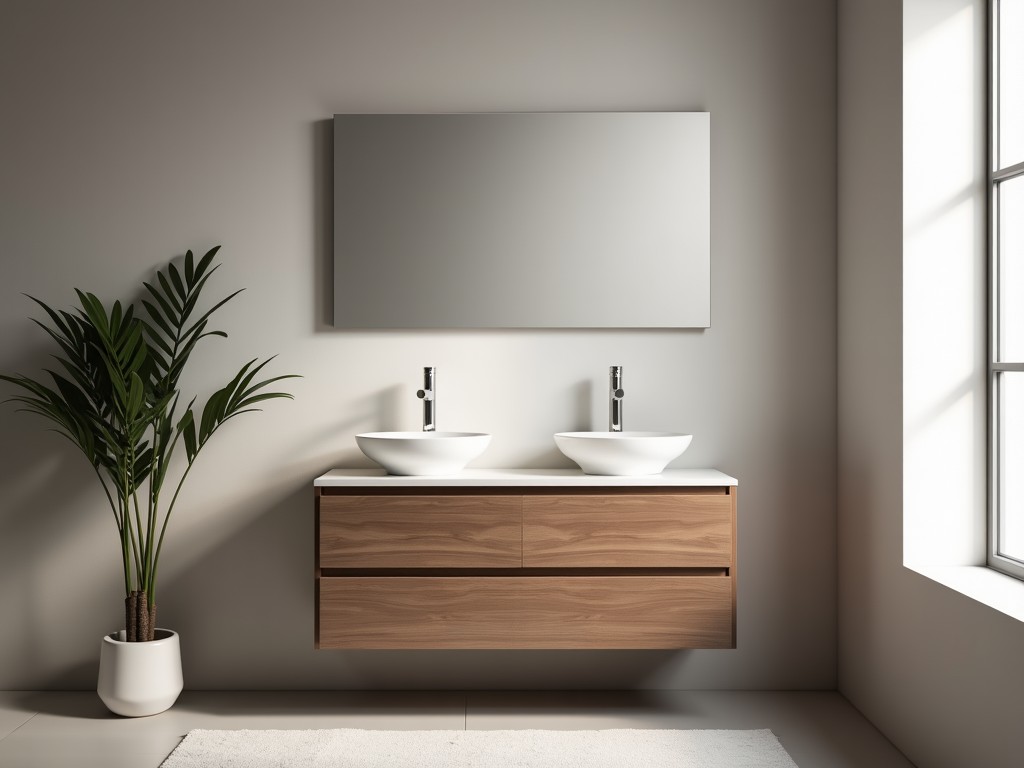
Bulk Free Standing Vanity With Sink
Bulk Free Standing Vanity with Sink
This product is a floor‑mounted vanity unit that combines a cabinet base with an integrated sink basin, intended for high‑volume installations in commercial and institutional facilities. The design eliminates the need for separate countertop and sink components, reducing on‑site assembly time and minimizing joint failures.
Design and Construction
The unit consists of a reinforced chassis made from 1.5 mm cold‑rolled steel, powder‑coated for corrosion resistance. The sink basin is formed as a single piece from the selected material, with a uniform wall thickness of 12 mm for solid surface options and 8 mm for vitreous china. All edges are radiused to a minimum radius of 3 mm to facilitate cleaning and reduce stress concentration.
- Standard faucet hole configuration: single‑hole Ø35 mm, with optional 2‑hole or 3‑hole patterns.
- Integrated overflow channel with Ø20 mm discharge, positioned 15 mm below the rim.
- Rear-mounted bracket system allows leveling adjustment of ±5 mm across the footprint.
- Base includes adjustable leveling feet with 30 mm travel and lock‑nut securing.
| Parameter | Typical Value (Customizable) |
|---|---|
| Overall Width | 800 mm – 1500 mm (in 50 mm increments) |
| Overall Depth | 460 mm – 560 mm |
| Overall Height (incl. basin) | 820 mm – 920 mm |
| Basin Depth | 150 mm – 200 mm |
| Basin Width (clear opening) | 500 mm – 800 mm |
| Material Thickness (solid surface) | 12 mm ±0.5 mm |
| Maximum Distributed Load (uniform) | 250 kg |
Applications
Free standing vanities with integrated sinks are specified in environments where rapid installation, long‑term durability, and hygienic surfaces are critical. In hotel guest bathrooms, the monolithic construction eliminates grout lines that can harbor mold, reducing maintenance cycles. In healthcare facilities, the seamless basin and chemical‑resistant surface meet stringent infection‑control protocols, allowing routine disinfection with alcohol‑based agents without surface degradation. Educational institutions benefit from the vandal‑resistant impact strength of solid surface, which withstands repeated impacts from backpacks and equipment.
Material Options
- Acrylic‑based solid surface: non‑porous, repairable, density ≈ 1.6 g/cm³, tensile strength ≈ 40 MPa.
- Vitreous china: glazed ceramic, water absorption < 0.5 %, flexural strength ≈ 70 MPa.
- Grade 304 stainless steel: thickness 1.2 mm, yield strength ≈ 215 MPa, excellent chemical resistance.
- Composite marble (dolomite resin): density ≈ 2.4 g/cm³, compressive strength ≈ 80 MPa, available in veined finishes.
Quality Assurance
Dimensional inspection is performed on a coordinate measuring machine with a tolerance of ±2 mm on critical interfaces (faucet holes, drain outlet, mounting brackets). Surface finish is quantified by profilometry; solid surface units target an arithmetic average roughness (Ra) ≤ 0.8 µm to ensure cleanability. Each batch undergoes a hydrostatic test at 1.5 times the rated working pressure for 5 minutes to verify leak‑free joints. Documentation includes material test reports, inspection records, and a conformity declaration per ISO 9001:2015.
Customization
Beyond standard dimensions, the chassis can be altered to accommodate side‑mounted accessories such as soap dispensers or towel bars, using M6 threaded inserts spaced at 100 mm intervals. The basin geometry can be modified to include a rear‑set overflow or a front‑lip for improved splash control. CNC routing enables the integration of a backsplash up to 120 mm high, matching the vanity material for a seamless appearance. Lead time for custom configurations is typically 4–6 weeks after final drawing approval, subject to material availability.
Frequently Asked Questions
Can dimensions be customized?
Yes. Width, depth, and height are adjustable in 50 mm increments, and basin proportions can be tailored to match specific faucet layouts.
What information is required before quotation?
Please provide the desired overall dimensions, material selection, faucet hole pattern, overflow configuration, and any accessory mounting requirements. A sketch or CAD file accelerates the quoting process.
How is quality inspected?
Each unit undergoes dimensional CMM verification, surface roughness measurement, and hydrostatic pressure testing. Inspection certificates are supplied with every shipment.