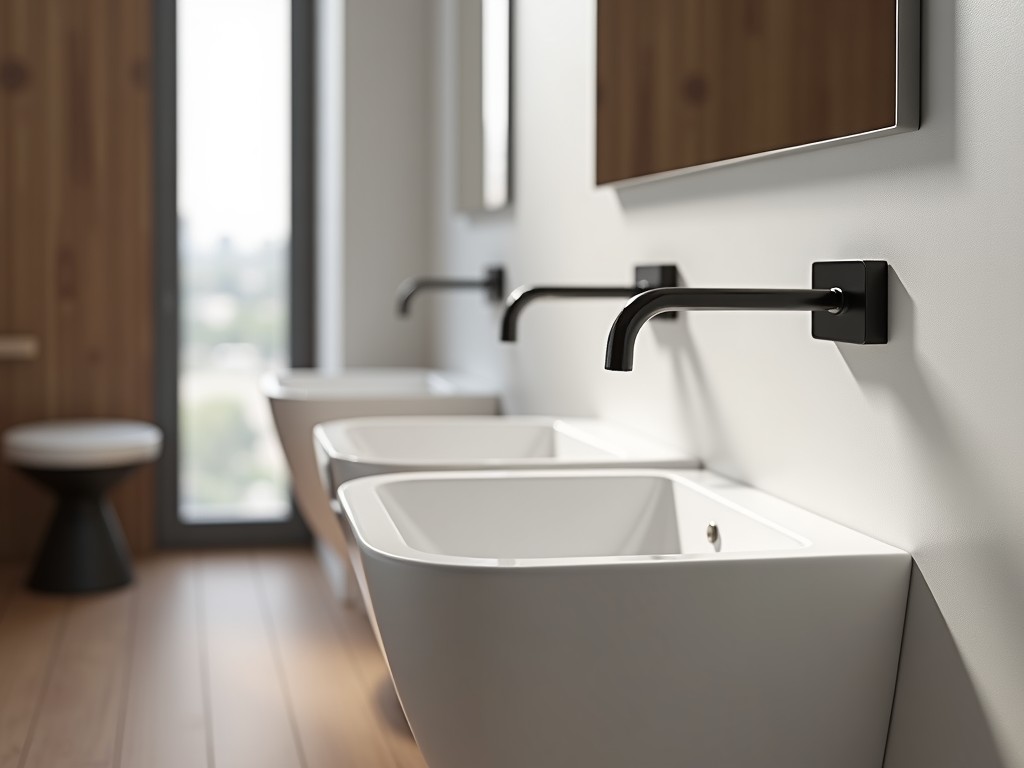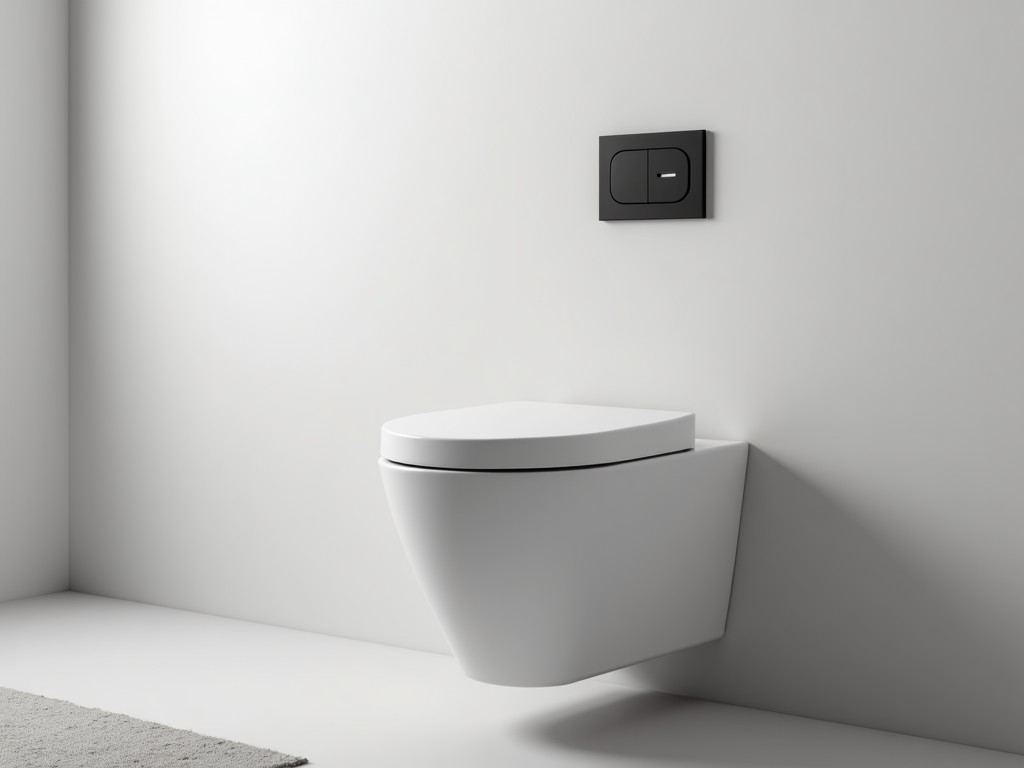
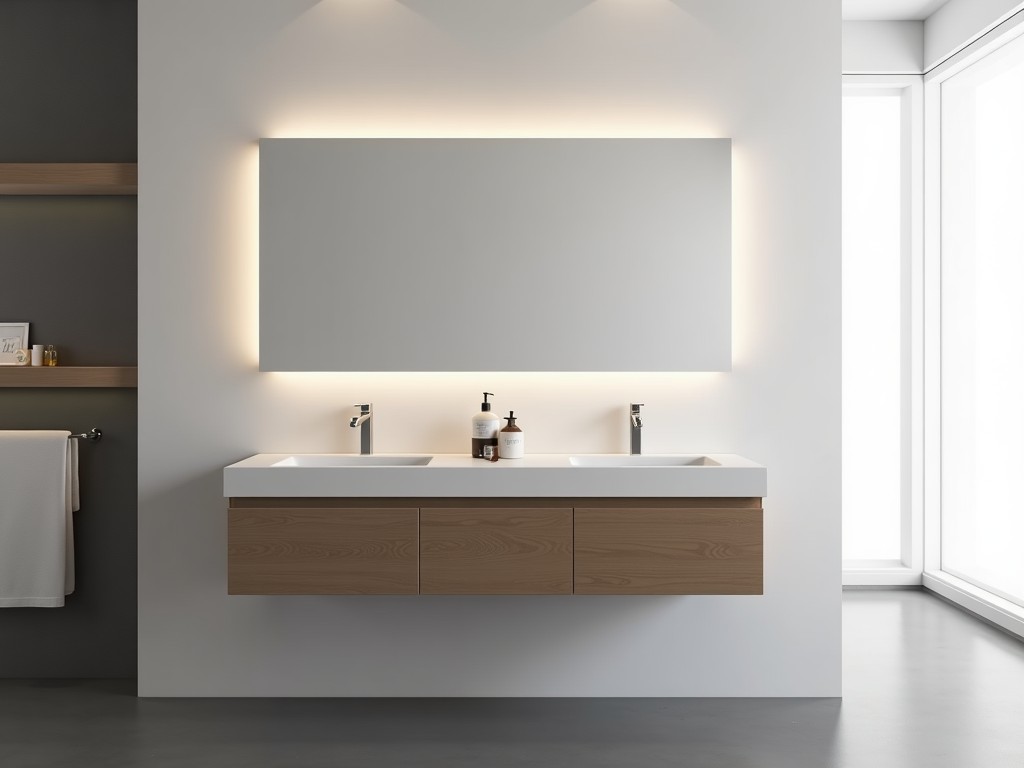
Bulk Bathroom Sink Units Wall Hung
Bulk Wall-Hung Bathroom Sink Units
Wall‑hung sink units are mounted directly to the structural wall, eliminating floor‑standing pedestals and creating a clear floor space that simplifies cleaning and improves accessibility in high‑traffic restrooms. In bulk procurement projects, specifying a standardized wall‑hung configuration reduces installation time and minimizes variations that can lead to costly rework. The following sections detail the engineering parameters that determine long‑term performance and suitability for commercial environments.
Design and Engineering Considerations
The primary load path transfers the sink weight and user‑applied forces through concealed steel brackets anchored to studs or masonry. Design calculations typically assume a uniform distributed load of 150 N per mounting point, with a safety factor of 3 to accommodate dynamic loads such as leaning or impact. Deflection limits are set to less than 0.5 mm under service load to maintain proper faucet alignment and prevent seal failure.
Material Selection
Vitreous china remains the most common choice due to its low water absorption (<0.5 % after 24 h immersion), high compressive strength (> 80 MPa), and resistance to chemical cleaning agents. For environments requiring impact resistance, 304 stainless steel basins offer a tensile strength of approximately 520 MPa and can be fabricated with seamless welded corners to eliminate crevices. Solid surface composites provide a non‑porous surface with a flexural modulus around 3 GPa and allow integrated backsplashes without visible joints. Material thickness typically ranges from 12 mm for china to 1.5 mm for stainless steel, influencing both weight and stiffness.
Typical Dimensions and Load Ratings
| Parameter | Typical Value / Range |
|---|---|
| Mounting Type | Concealed steel bracket, load‑rated to 2 kN per point |
| Basin Material | Vitreous china, 304 stainless steel, solid surface |
| Nominal Width | 450 mm – 600 mm (customizable) |
| Nominal Depth | 350 mm – 500 mm |
| Nominal Height (from finished floor to rim) | 800 mm – 860 mm (ADA compliant) |
| Maximum Distributed Load | 1.5 kN (uniform across basin) |
| Deflection Limit | <0.5 mm at service load |
| Water Absorption (china) | <0.5 % (24 h) |
| Surface Hardness (Mohs) | 5–6 (vitreous china) |
Applications in Commercial and Institutional Projects
In hospitals, schools, and transportation hubs, wall‑hung sinks reduce the number of floor‑standing fixtures that collect dirt and impede wheeled traffic. The clear floor space facilitates compliance with ADA reach‑range requirements and allows for uniform floor finishes that simplify maintenance schedules. Bulk ordering of a single wall‑hung model streamlines spare‑parts inventory and ensures consistent performance across large facilities.
- Patient rooms and clinics where infection control priorities demand seamless, easy‑to‑clean surfaces.
- Laboratory and research facilities requiring chemical‑resistant basins and minimal splash‑back.
- Airport terminals and train stations with high‑volume usage and strict cleaning cycles.
- Office building restrooms where ADA compliance and modern aesthetics are specified.
- Hotel guest bathrooms seeking a compact footprint without sacrificing durability.
Customization Options
Customization begins with the basin geometry; width and depth can be adjusted in 50 mm increments to match countertop layouts or stall partitions. Faucet hole patterns are configured per project specifications, ranging from single‑hole centerset to widespread three‑hole arrangements, with optional overflow and drain‑hole positioning. Additional options include integrated soap dispensers, touch‑less sensor faucets, and anti‑microbial glaze treatments that reduce bacterial colonization by up to 99 % after 24 h exposure.
Quality Control and Testing
Each production lot undergoes a hydrostatic pressure test at 1.5 times the rated load for 10 minutes to verify joint integrity and detect micro‑cracks. Glaze adhesion is assessed using a cross‑hatch tape test according to ASTM D3359, with acceptance requiring a rating of 5B or better. Impact resistance is evaluated by dropping a 2 kg steel ball from a height of 1 m onto the basin surface; no visible cracking or chipping is permitted. Dimensional inspection is performed on a coordinate‑measuring machine, confirming that critical features such as hole centers and rim flatness remain within ±0.2 mm of the nominal design.
Frequently Asked Questions
- Can dimensions be customized?
- Yes. Width and depth can be adjusted in 50 mm increments, and height can be modified to meet specific ADA or ergonomic requirements, subject to structural bracket capacity.
- What materials are available?
- Standard options include vitreous china, 304 stainless steel, and solid surface composites. Specialty materials such as bronze‑coated zinc or fire‑rated clay are available upon request.
- How is quality inspected?
- Quality control includes hydrostatic pressure testing, glaze adhesion (ASTM D3359), impact resistance testing, and CMM dimensional verification. All test records are retained for traceability.
- What packaging methods are available?
- Units are packed in double‑wall corrugated cartons with corner protectors and foam edge guards. Palletized shipments use stretch wrap and strapping for load stability.
- What is the typical production lead time?
- Lead time ranges from 4 to 6 weeks for standard configurations, with expedited options available for projects requiring faster delivery.