Black Metal Bathroom Cabinet Suppliers
Black Metal Bathroom Cabinet Suppliers – Technical Overview
This page explains the engineering characteristics that define metal bathroom cabinets supplied for commercial and institutional projects. Understanding material thickness, coating systems, and load performance helps procurement teams evaluate long‑term suitability before requesting a quote.
Material Composition and Thickness
Cabinets are typically fabricated from cold‑rolled steel sheets with a nominal thickness ranging from 0.8 mm to 1.5 mm, selected based on door span and intended load. The steel substrate provides a uniform grain structure that resists deformation under repeated use.
Surface protection is applied via electrostatic powder coating, delivering a uniform film thickness of 60‑80 µm. This coating offers resistance to moisture, cleaning agents, and mild impacts, which is essential in humid bathroom environments.
Structural Design and Load Ratings
Cabinet frames incorporate reinforced corner brackets and a central mullion to increase torsional rigidity. Finite element analysis shows a maximum deflection of less than 2 mm under a uniformly distributed load of 150 kg on the shelf.
Door hinges are concealed, heavy‑duty butt hinges rated for 30 000 cycles, ensuring consistent alignment over the product lifecycle. Soft‑close dampers are optional and add a closing speed of 0.2 s to 0.4 s.
Standard Dimensions and Customization
| Dimension | Typical Range (mm) | Notes |
|---|---|---|
| Overall Height | 600 – 2100 | Includes plinth and optional leg levelers |
| Width (single door) | 300 – 600 | Multiple units can be ganged for wider runs |
| Depth | 200 – 350 | Clearance for plumbing fixtures considered |
| Shelf Thickness | 18 – 25 | Reinforced with edge band or steel stiffener |
Dimensions outside these ranges are achievable through custom tooling; lead time increases proportionally to the complexity of the required modifications.
Corrosion Resistance and Finish Options
After powder coating, cabinets undergo a salt‑spray test (ASTM B117) for a minimum of 250 hours with no red rust visible on coated surfaces. This performance level suits environments with frequent cleaning cycles.
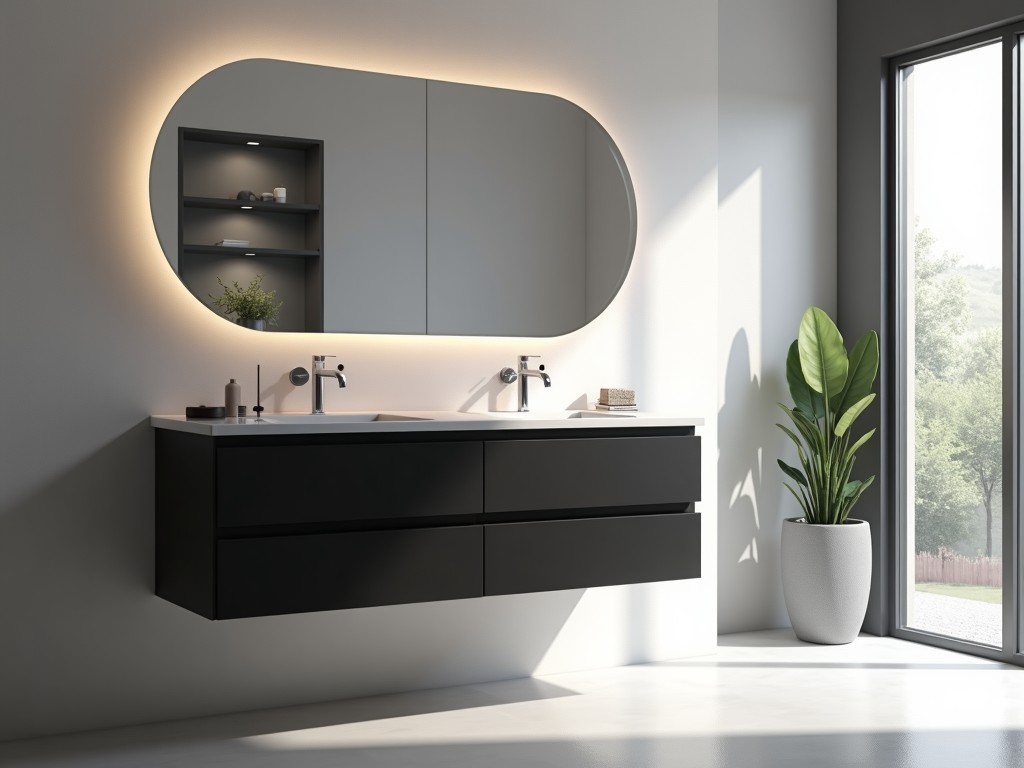
Available finishes include matte black, satin black, and textured black. Each finish is defined by a specific gloss unit (GU) measurement: matte < 10 GU, satin 10‑30 GU, textured variable based on pattern depth.
Manufacturing Process Overview
Production begins with CNC punching of blanks to achieve precise hole patterns for hinges, shelves, and cable management. Subsequent bending is performed on press brakes with ±0.2 mm angle tolerance to ensure square corners.
Welding, where required, uses robotic MIG with pulsed arc to minimize heat‑affected zone and preserve coating adhesion. All welded joints are ground smooth before coating application.
Quality Assurance and Inspection
- Dimensional verification using calibrated CMM; tolerance ±0.5 mm on critical features.
- Coating thickness measured via magnetic induction gauge; acceptance range 60‑80 µm.
- Load testing of shelves to 150 kg with deflection recorded.
- Cycle testing of hinges and soft‑close mechanisms to 30 000 operations.
- Visual inspection for coating defects under 500 lux illumination.
Non‑conforming parts are segregated and either reworked or scrapped according to internal defect classification.
Packaging and Logistics
Cabinets are packed in double‑wall corrugated cartons with interior polyethylene foam corners. Each unit is secured with polyester straps and includes a silica gel packet to control moisture during transit.
Palletized shipments conform to ISPM‑15 standards for export, with a maximum stack height of 1.2 m to prevent deformation. Tracking numbers and packing lists are provided electronically.
Typical Applications
In hotels, the cabinets support frequent guest turnover, requiring resistance to cleaning chemicals and minimal maintenance. The powder‑coated surface prevents staining from toiletries and permits easy wipe‑down.
Healthcare facilities benefit from the non‑porous finish, which reduces microbial retention and complies with hygiene protocols. The structural rigidity accommodates heavy medical supplies without sag.
Educational installations rely on the impact‑resistant coating to withstand heavy use in dormitory bathrooms, while the clean aesthetic aligns with modern interior design.
Frequently Asked Questions
Can dimensions be customized?
Yes, height, width, and depth can be adjusted to project specifications. Custom tooling may affect lead time and cost.
What information is required before quotation?
Provide required overall dimensions, door configuration, shelf count, finish preference, and any special accessories such as integrated lighting or lock provisions.
What materials are available?
Standard material is cold‑rolled steel; alternative substrates such as galvanized steel or stainless steel grades 304/316 are offered upon request for specific corrosion demands.
How is quality inspected?
Inspection includes dimensional checks, coating thickness measurement, load testing, hinge cycle testing, and visual defect assessment as outlined in the quality assurance section.
What packaging methods are available?
Standard packaging uses double‑wall cartons with foam corner protection. Heavy‑duty crating or reusable pallets can be arranged for large‑volume orders.
What is the typical production lead time?
Lead time ranges from 3 to 6 weeks for standard configurations, depending on order volume and current plant capacity. Custom sizes may extend this period.
Next Steps
To discuss your project requirements and obtain a detailed quotation, please contact our technical sales team.