Bathroom Mirror Cabinet With Lights Battery Operated
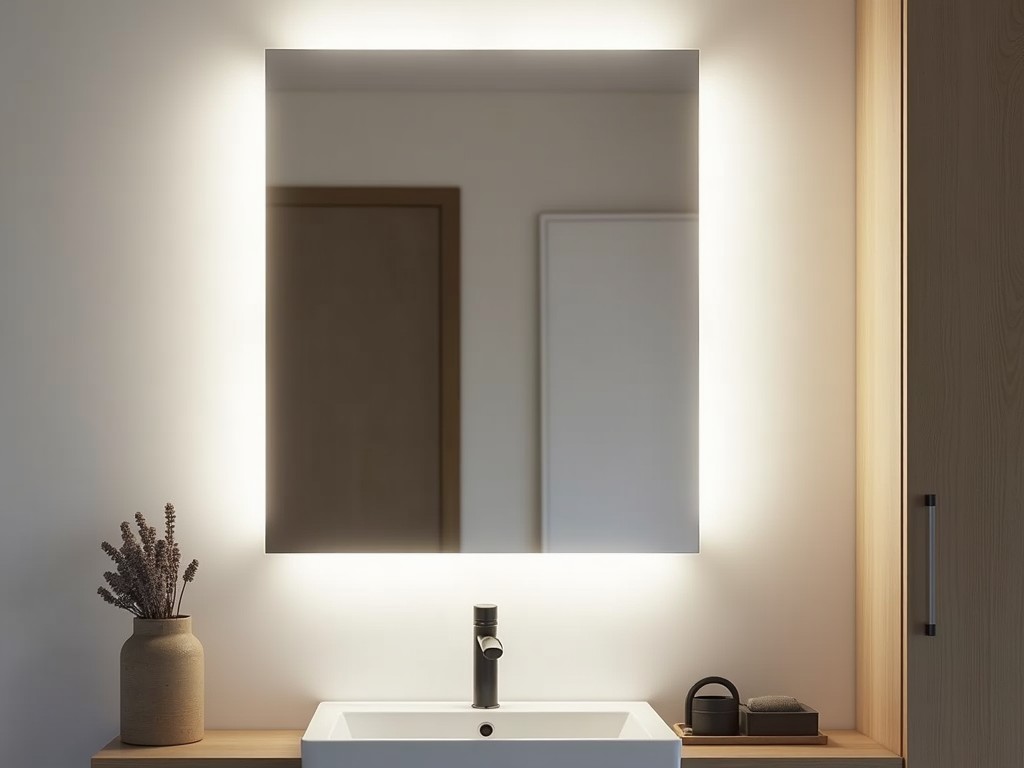
Bathroom Mirror Cabinet with Battery-Operated LED Lighting
This unit combines a low‑iron silvered mirror with integrated LED illumination powered by a sealed rechargeable battery pack. The design eliminates the need for hard‑wired mains connections, making it suitable for retrofit installations, temporary facilities, or locations where electrical access is limited or prohibited by code.
Illumination and Power Characteristics
The LED array consists of 12 SMD 2835 chips arranged in a uniform strip behind the mirror face, delivering a total luminous flux of 420 lm at a correlated colour temperature of 4000 K (neutral white). Colour rendering index (CRI) is ≥80, ensuring accurate skin tone representation for grooming tasks.
Power is supplied by a 3.7 V lithium‑iron‑phosphate (LiFePO₄) cell with a nominal capacity of 2600 mAh. Under continuous operation at 70 % duty cycle the battery provides approximately 8 hours of illumination before requiring recharge. A built‑in micro‑USB charging port allows replenishment from a 5 V/1 A source in roughly 2.5 hours.
Mechanical and Environmental Specifications
| Parameter | Typical Value | Notes |
|---|---|---|
| Mirror substrate | Low‑iron float glass, 4 mm thickness | Reflectance ≥92 % across 400‑700 nm |
| Frame material | Extruded aluminium alloy 6063, anodized | Corrosion resistance to ASTM B117 salt spray (≥500 h) |
| Ingress protection | IP44 (protected against splashing water from any direction) | Suitable for zone 2 bathroom environments per IEC 60364‑7‑701 |
| Overall dimensions (W×H×D) | 600 mm × 700 mm × 120 mm | Includes mounting bracket protrusion |
| Net weight | 5.8 kg | Includes battery pack |
| LED lifespan | 50 000 h to L70 brightness | At 25 °C ambient temperature |
Typical Applications
In hospitality settings the cabinet provides guest‑room vanity lighting without requiring electrical contractors to run new conduit, reducing installation time and cost. In healthcare facilities the IP44 rating and battery isolation allow placement near sinks where mains‑powered fixtures would pose a shock hazard. For residential renovations the unit offers a quick upgrade path for older bathrooms lacking sufficient overhead lighting, preserving existing wall finishes.
Installation Considerations
The cabinet is secured using two concealed zinc‑plated steel brackets that attach to wall studs or solid backing with M4×30 mm screws. A leveling guide integrated into the rear rail ensures vertical alignment within ±1°. The battery pack slides into a recessed compartment on the interior side and is retained by a snap‑fit latch; removal requires no tools, simplifying service.
No external wiring is necessary; however, the micro‑USB charging port should be positioned where a 5 V source is accessible (e.g., adjacent vanity outlet or USB wall charger). For environments with frequent moisture ingress, applying a silicone sealant around the bracket interfaces maintains the IP44 rating over time.
Maintenance and Service
Cleaning the mirror surface with a mild non‑abrasive glass cleaner and a soft microfiber cloth preserves the coating; avoid ammonia‑based solutions that can degrade the silver layer over repeated use. The aluminium frame may be wiped with a damp cloth; an annual inspection of the anodized layer for signs of pitting is recommended in high‑chloride atmospheres.
Battery capacity should be checked after 500 charge‑discharge cycles; if runtime falls below 4 hours at 70 % duty cycle, replace the LiFePO₄ cell with a compatible 3.7 V 2600 mAh unit. LED modules are not user‑serviceable; however, the rated 50 000 h lifespan typically exceeds the product’s service life under normal usage.
Frequently Asked Questions
Yes. The mirror glass and aluminium frame can be cut to project‑specific widths ranging from 400 mm to 900 mm while maintaining the same LED strip layout and battery compartment depth. Custom lengths require a new tooling quote and extended lead time.
To generate a firm quote we need the desired overall width, height (if non‑standard), preferred colour temperature (3000 K, 4000 K, or 6000 K), and any special finish (e.g., powder‑coated colour). Additionally, indicate the expected quantity for tooling amortization.
Each unit undergoes a 100 % functional test: LED flux measurement (±5 % tolerance), battery voltage under load, and IP44 spray test. Visual inspection checks for mirror surface defects (scratches, pitting) and frame finish uniformity. AQL‑based sampling is applied for cosmetic attributes.
For technical datasheets, customization requests, or to arrange a sample unit, please contact our engineering team.
Request Quote or Sample